3 min read
Keeping EV Chargers Working on a Fuel Forecourt
If you have EV chargers on your forecourt, you already know they are different from a fuel dispenser. They look...
Engineering, permits, utility coordination, installation, and closeout, run by one project manager who answers to you.
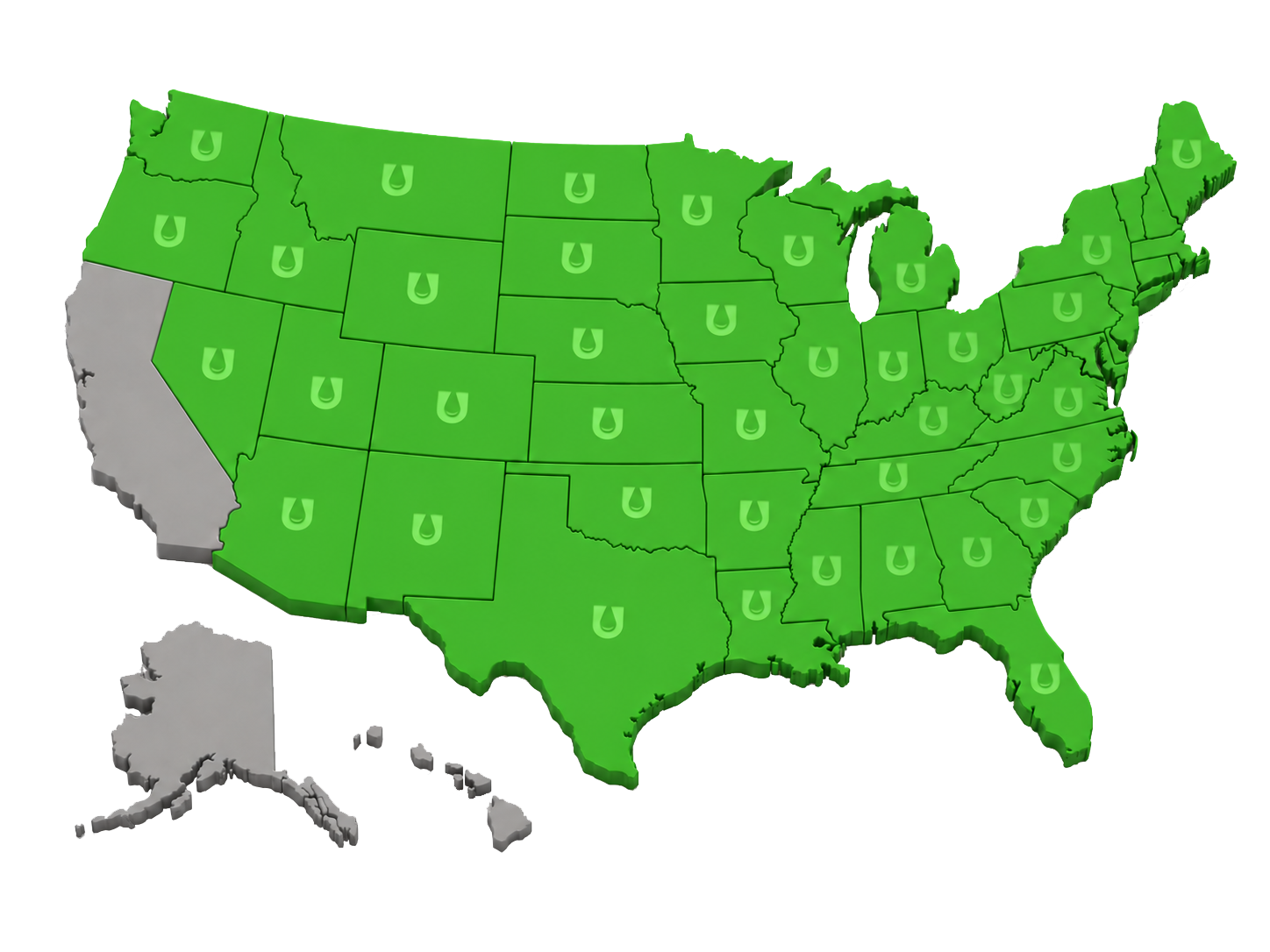
47 states
with active commercial EV installation capability
One contact
for engineering, permits, utility, install, and inspection
Turnkey delivery
from site assessment through utility energization
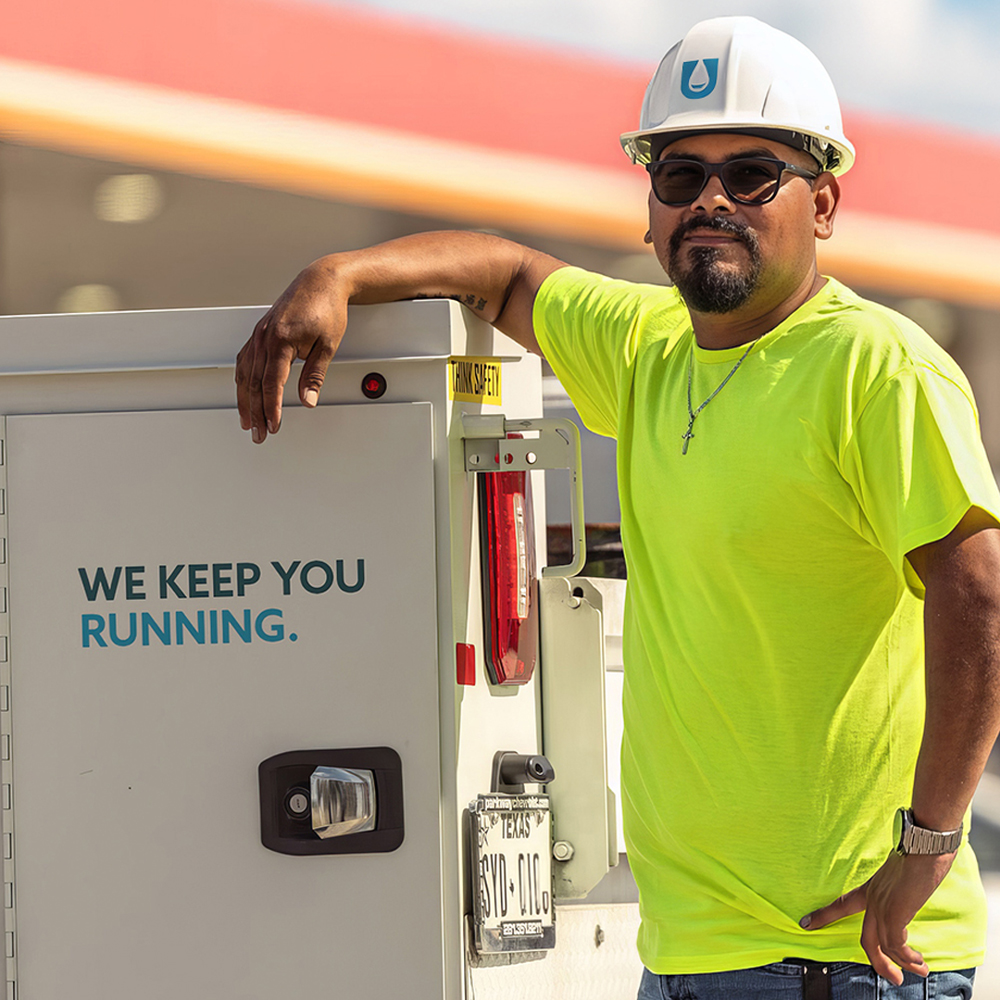
Every commercial EV project touches engineers, permit offices, utilities, and charging station contractors. You should only have to talk to one person.
One point of contact. One project manager owns the schedule and the communication, from site assessment through utility energization.
Coordinated project delivery. Engineering, permitting and utility coordination run by our team, with no handoffs between vendors and no waiting on a third party.
A clear handoff at completion. Closeout documentation and photos come back to your team, so you always know what is in the ground and how it was done.
One project, one team
Tell us where the project stands and a project manager will walk you through what your site needs.
Question 01
Utility agreements are tied to the land, so ownership matters. If you lease, we can talk through what your landlord needs to be part of.
Question 02
Panel capacity, conduit, and utility service determine cost and schedule. Not sure? A site assessment is how every project starts.
Question 03
Bring your own chargers and we will install them. Still deciding? We help you choose equipment that fits your site and your customers.
Ready to move forward?
Our team will help you assess, plan, and build the right solution for your site.
Five phases, one project manager, and no guessing about where things stand.
In a perfect world, projects complete in approximately three months. Utility energization is typically the longest phase and varies by market. These are typical phases, not commitments. Check local and state requirements.
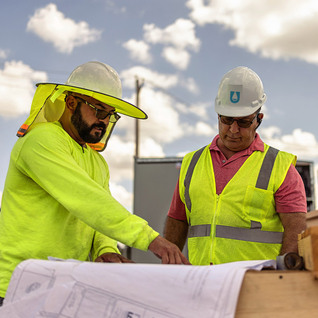
Stamped drawings, load calculations, and the utility application, prepared in house and filed on your behalf.
More on engineering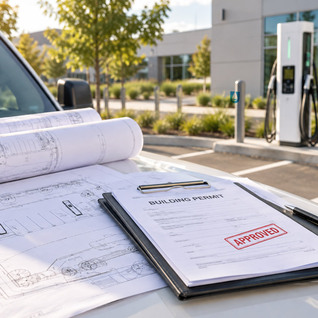
We prepare and file the permits your local authority requires, so you never sit in a permit office.
More on permitting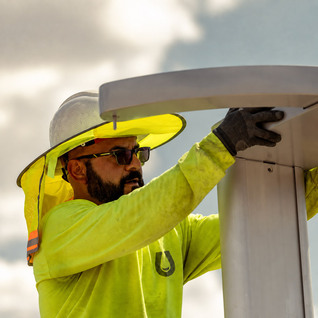
Trenching, conduit, concrete, and charger placement by crews trained on the equipment they install, scheduled around your store hours.
More on installation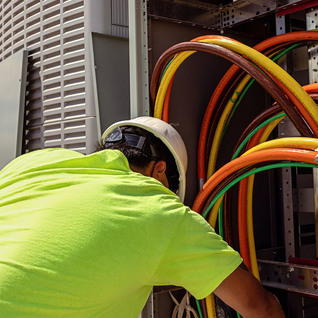
We schedule the inspection with your local inspection authority, meet the inspector, and close out any findings.
More on inspections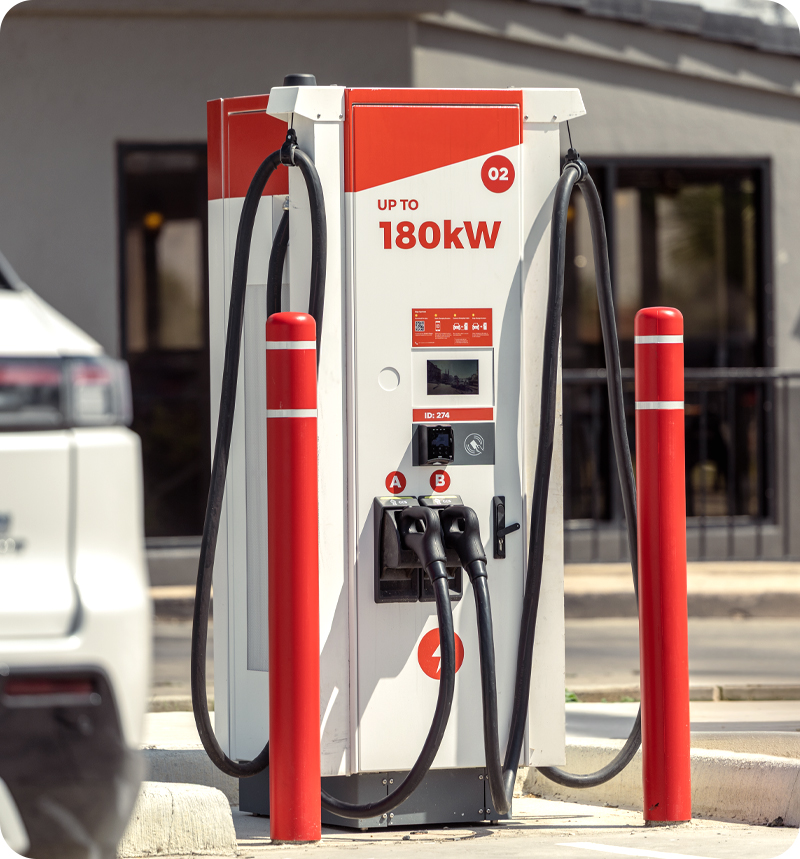
Chargers cannot be used until the utility flips the switch. We stay on the utility through that handoff and confirm the site is energized.
More on energizationWhat shapes the build is the power your site can get, how fast drivers need to be back on the road, and what you want charging to do for your business.
DCFC
More power, more planning
Deployment scale
Dedicated hubs built as destinations, from a handful of ports to 40 or more chargers on one site. Managed like the infrastructure projects they are: one project manager from day one, engineering and utility coordination scaled to the site load, and phased construction so an operating site stays open while crews work.
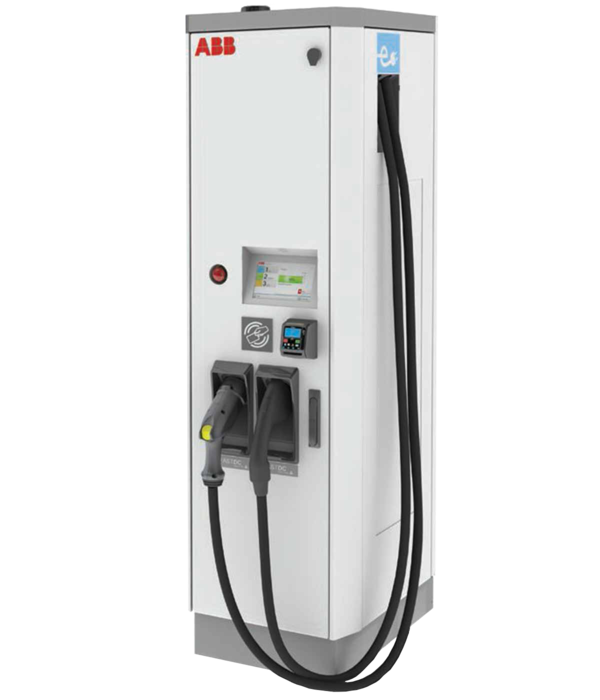
Already purchased your chargers? Most of our customers bring their own equipment.
As your EV charging station installation contractor, we secure the permits your project requires and manage crews trained on the equipment they install, wherever your project sits. Your project manager stays the same no matter the market.
Service area, up front
We run projects in several states at the same time, so a multi-site rollout does not have to happen one market after another. See all locations
Already a fueling customer? EV installs coordinate with your existing service and compliance work. Chargers already in the ground? See EV charger maintenance and repair.
47 stateswith installation capability
Funding programs are real, but they are scattered across federal, state, and utility sources and they change often. We work through a network of grant writers, so finding money for your project is part of the service, not homework we hand back to you.
01
We bring in grant writers who research and write the applications for the programs your project and location qualify for, starting with the first conversation.
02
Many utilities offer per-port or infrastructure rebates for commercial installations. These are the most consistent sources, and they differ by market.
03
If there is no funding fit for your project, we say so and scope accordingly. You find out what money is available before you commit budget.
Federal programs such as NEVI exist but their status shifts with policy. Check current program status before you build a plan around it, and check local and state requirements.
The questions that come up on nearly every first call, with the same answers our project managers give.
Reviewed by the United Uptime Services EV Charging division. Based on our project process and completed commercial installations.
It depends on your site more than the equipment. The biggest cost drivers are the distance from your electrical service to the charger locations, whether your service has capacity to spare, how much trenching and concrete work the layout requires, and how much power the chargers draw.
That is why we assess the site before we quote. The number you get reflects your property, not a national average. Grants and rebates can offset a meaningful share of the total, and the grant writers we work with check that for you.
Typically about two to six weeks on site, depending on how complex the site is. Long conduit runs, a service upgrade, or difficult ground push it toward the longer end. Engineering, permitting, and utility energization sit outside that window, and utility energization is usually the longest phase and varies by market. These are typical phases, not commitments.
A make-ready property has the electrical capacity, conduit pathways, and physical space to support chargers without major rework. Some newer commercial buildings are already partway there, because jurisdictions such as New Mexico now require new construction to include conduit and sized power for future EV charging. A site assessment tells you exactly where your property stands. Check local and state requirements.
Often, yes, though nothing is guaranteed. Funding for commercial EV charging comes from federal, state, and utility programs, and each one sets its own eligibility rules and award decisions. State and utility rebates tend to be the most consistent sources, and they differ by market. Federal programs such as NEVI exist but their status shifts with policy.
We work through a network of grant writers, so researching what your project and location qualify for is part of the service. If there is no funding fit, we say so and scope accordingly. Check current program status before you build a plan around it, and check local and state requirements.
The charger manufacturer does. Customers pre-buy a maintenance package with the manufacturer, usually two, three, or five years, and the manufacturer will not activate the charger without one. We make sure your equipment is registered, your package is in place, and your installation is documented so service visits go smoothly. For chargers already in the ground, see our EV charger maintenance and repair page.
United Uptime: May 11, 2026
Tell us where your project stands, even if it is only an idea. A member of our EV team will review your details and follow up with next steps.
One project manager owns the schedule and the communication, from site assessment through utility energization.
Stamped drawings, load calculations and the utility application, prepared by our own team.
We work through a network of grant writers, so finding money for your project is part of the service.
Prefer to talk now? (833) 543-0101
The more you can tell us, the more useful the first conversation.