EV charger inspection,
from schedule to sign-off.
The last approval a commercial charging project needs before the utility will energize it. We book the inspection with the authority having jurisdiction, test the work before the inspector arrives, walk the site with them, and correct anything they write up.
- Rough-in and final inspections booked with your authority having jurisdiction
- Continuity, grounding, ground-fault protection and torque tested and recorded before the inspector arrives
- Corrections closed out and the re-inspection booked, not handed back to you
47 states
EV charger inspection and testing
Nothing gets covered up before it gets looked at.
An inspection that fails on an EV project is almost never about bad work. It is about something being buried before it was seen, a detail that changed in the field and never made it onto the drawings, or a test nobody ran until the inspector was standing there. All three are avoidable, and all three are scheduling problems rather than skill problems.
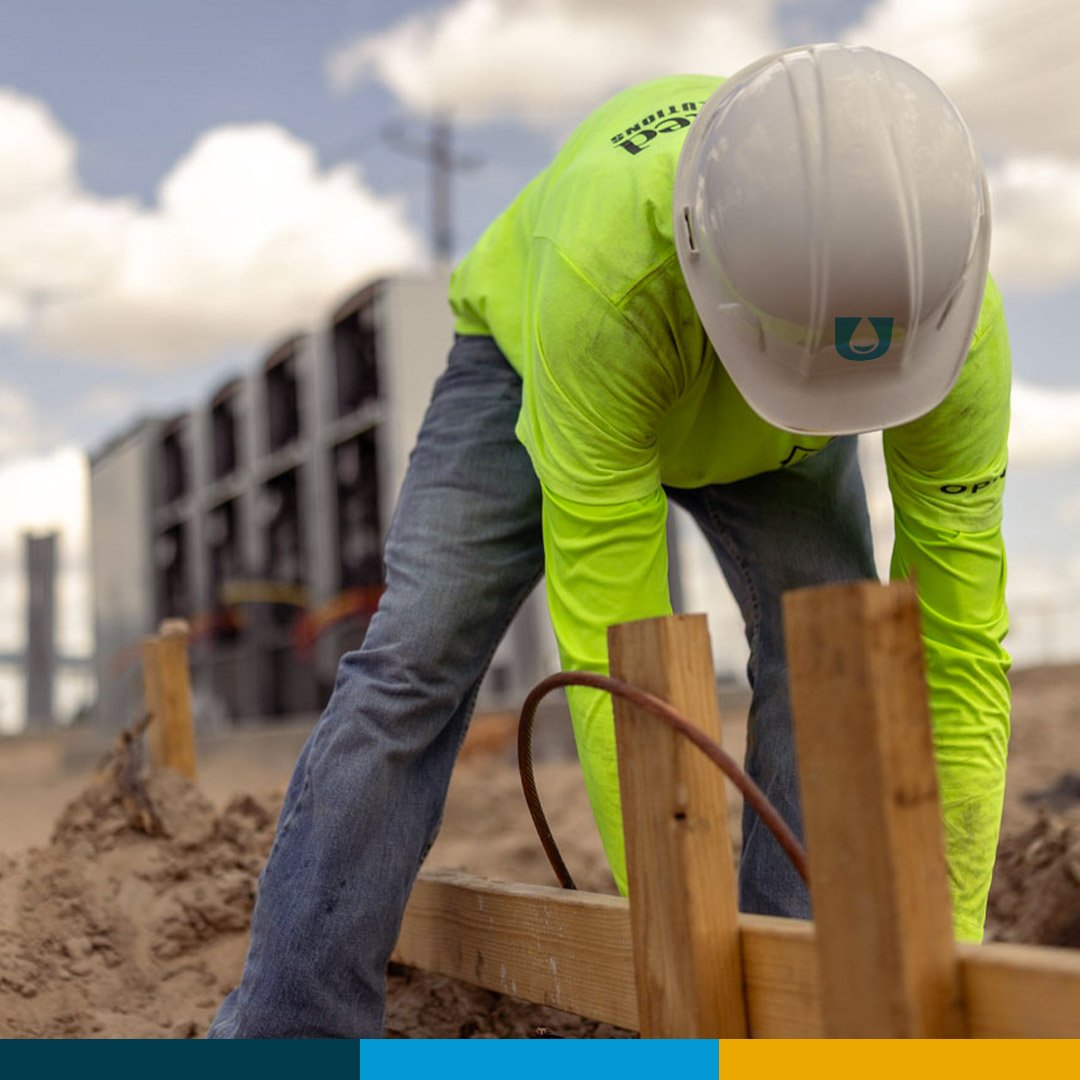
There is more than one inspection. Rough-in happens while the trench is open and the conduit is still exposed. Final happens once the equipment is set. Miss the rough-in and the correction is a saw cut through new concrete.
The inspector checks the approved set. Not the newest revision, the stamped one. Anything that changed in the field gets documented and submitted before the inspection rather than explained during it.
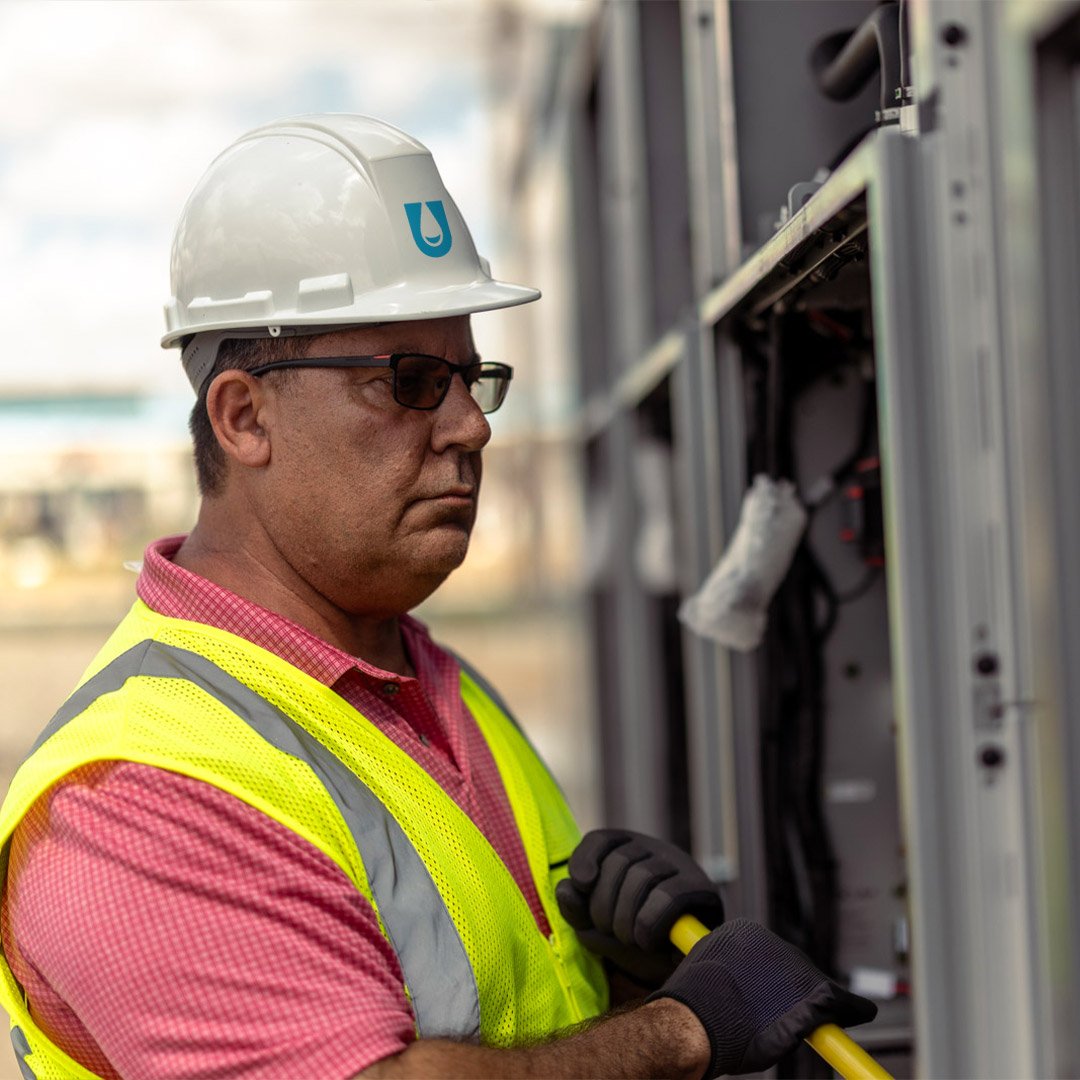
We are there when they walk it. United Uptime Services books the inspection with the authority having jurisdiction, meets the inspector on site, and corrects and re-submits anything written up. Check local and state requirements.
What happens between the last connection and the signed inspection.
Five steps from an open trench to a record the utility will accept.
-
1
Before the trench closes
Rough-in inspection
Conduit, grounding, bonding and burial depth looked at while everything is still open. This is the one that costs the most to miss, because the fix after concrete is a saw cut.
-
2
Before the inspector is called
Testing and readiness
Continuity, grounding, insulation resistance, ground-fault protection and torque verification, run and recorded by our crew so the inspector sees results rather than a first attempt.
-
3
Booked on your behalf
Inspection scheduled
We book the final with the authority having jurisdiction, confirm what that inspector expects to see, and make sure the approved set and the permit card are on site.
-
4
Walked with the inspector
Final inspection
Someone from our side is there for it. Questions get answered standing at the equipment instead of turning into a correction notice and another trip.
-
5
Handed to energization
Sign-off and close-out
The signed inspection record comes back to your team with the test results and the as-builts, and the project moves to the utility for energization.
Inspection stages, what each inspector checks and how inspections are scheduled are set by the authority having jurisdiction and vary between them. Work is inspected against NEC Article 625 and the code year your jurisdiction has adopted. These are typical phases, not commitments. Check local and state requirements.
What you get when the inspection is signed.
Proof the work was looked at and approved, in your hands rather than in a folder on somebody else's desk.
The approval
Signed inspection record
The sign-off for each stage, tied to the permit number it closes. This is the document the utility looks for before it will energize the site.
The evidence
Test results
Continuity, grounding, insulation resistance, ground-fault protection and torque readings recorded circuit by circuit, so the numbers exist on paper rather than in somebody's memory.
The record
Corrections and closures
Anything the inspector wrote up and what was done about it. A clean file beats a clean memory when somebody asks two years from now.
The handoff
As-builts for energization
Drawings updated to match what is actually in the ground, handed straight to the energization phase so the utility does not have to ask for anything twice.
On this page
What gets inspected
01What does it cover? 02How many inspections? 03What testing comes first?Who and when
04Who inspects EV chargers? 05How long to schedule? 06Do you attend?When it does not go cleanly
07What if it fails? 08Common failures 09Can we start charging?What gets inspected
What does an EV charger inspection cover?
The wiring, the grounding, the mounting and the clearances, all checked against the approved drawings.
An inspector is answering one question: does what is in the ground and on the pad match the set the jurisdiction stamped, and does it meet the code year that jurisdiction has adopted. In practice that means conduit type and burial depth, conductor sizing, grounding and bonding, the disconnecting means, working clearance around the equipment, the mounting or foundation, and the accessible route to the stall.
Article 625 of the National Electrical Code is the section written for electric vehicle supply equipment, and most of what an inspector asks traces back to it. Check local and state requirements.
How many inspections does an EV charger project need?
At least two on most jobs. Rough-in and final.
Rough-in happens while the trench is open and the conduit is exposed, because once concrete is poured nobody can see what is underneath it. Final happens after the equipment is set and terminated. Some jurisdictions add a separate footing or foundation inspection, and a few want the fire marshal to look at DCFC equipment before anything else.
How many you get is a question about your jurisdiction and your scope rather than about EV charging generally. We confirm the stages before the first trench is dug, not after. Check local and state requirements.
What testing has to be done before the EV charger inspection?
Continuity, grounding, insulation resistance, ground-fault protection and torque.
Before an inspector is called, the circuits get verified: continuity end to end, grounding and bonding confirmed, insulation resistance measured, ground-fault protection function tested, and terminations torqued to the manufacturer specification and marked. The readings are recorded circuit by circuit so the inspector sees results rather than watching a first attempt.
This is not the same thing as commissioning. Activation, claiming the chargers into your network account, happens before there is power. Commissioning, a real session on every port, is the last step, after the utility energizes the site. Both are described on the installation page.
Who and when
Who inspects EV chargers?
The authority having jurisdiction, which is usually your local building or electrical department.
The authority having jurisdiction, usually shortened to AHJ, is whoever is legally empowered to enforce the code at your address. On most commercial EV projects that is a city or county electrical or building inspector. On some sites it is a state office, a fire marshal, or a third-party agency the jurisdiction has contracted to do its inspections.
Which one it is changes by address, sometimes between two sites in the same metro area. Establishing that is the first thing this phase does, because it decides everything else about how the phase runs.
How long does an EV charger inspection take to schedule?
It depends on the inspector queue, not on the size of your project.
Some jurisdictions take next-day requests. Others work a fixed schedule with a lead time. The size of the job rarely moves it; the queue in that office does. What is inside anyone's control is being genuinely ready when the inspector arrives, because a failed inspection puts you back in the same queue behind everybody else.
These are typical phases, not commitments. Your project manager gives you the picture for your jurisdiction once the scope is settled.
Do you attend the inspection?
Yes. Someone from our side meets the inspector on site.
We book the inspection with the authority having jurisdiction and have someone there when it happens. That matters more than it sounds. An inspector with a question about a termination or a clearance can get the answer standing at the equipment, and the conversation usually ends there. The alternative is a correction notice, a second trip and another slot in the queue.
Anything written up gets corrected and re-submitted by us rather than handed back to your team. Check local and state requirements.
When it does not go cleanly
What happens if an EV charger inspection fails?
You get a correction notice, the work gets fixed, and it goes back in for re-inspection.
A failed inspection is a list, not a verdict. The inspector writes up what does not comply, the work is corrected, and the job is re-inspected. Some jurisdictions charge a re-inspection fee. The real cost is usually the calendar rather than the fee, because you rejoin the queue, and if the utility was waiting on that sign-off, energization slips with it.
We handle the corrections and book the re-inspection. None of that routes back to your team.
What are the most common EV charger inspection failures?
Work covered before it was seen, and details that changed in the field.
The recurring ones: a trench closed or concrete poured before the rough-in, a conductor or conduit size that does not match the stamped set, grounding and bonding left incomplete, missing or unreadable labeling on the disconnect, not enough working clearance around the equipment, and an accessible route that was never drawn properly in the first place.
Almost none of these are workmanship problems. They are sequence and paperwork problems, which is exactly why this phase is worth owning rather than improvising.
Can the chargers be used as soon as the inspection passes?
No. The utility still has to energize the site.
The sign-off is what lets the utility move, not what turns the chargers on. Once the record is signed the site goes to the utility for energization, and until they flip the switch there is nothing to plug into. Activation, claiming the chargers into your network account, will already have happened. Commissioning, a real session on every port, follows once the utility energizes the site.
This is the most common surprise late in an EV project. A site that has passed its inspection can still be a way off its first session.
Where this page sits in the bigger project.
- EV charger inspections in 47 states, booked with the authority having jurisdiction and walked with the inspector by the same team that built the site.
- Not served: Alaska, Hawaii, California. We say so before you spend time on scoping.
- We run projects in several states at the same time, so a multi-site rollout does not have to happen one market after another. See all locations
Phase 1
Engineering
Load calculations, the utility application and stamped EV charging station design drawings, settled before anyone breaks ground.
Phase 2
Permitting
The permits your project needs, pulled and filed jurisdiction by jurisdiction, so you never sit in a permit office.
Phase 3
Installation
Trenching, conduit, concrete and the charger set, plus replacing or adding to the chargers already in the ground.
Phase 4
Inspection
We schedule the inspection with your local inspection authority, meet the inspector, and close out any findings.
Phase 5
Utility energization
Chargers cannot take a session until the utility flips the switch. We stay on that handoff until the site is energized.
Send us the site. We will tell you what the inspector will want.
A project manager checks which authority has jurisdiction at your address, which inspection stages your scope triggers, and what that office expects to see. Before the trench closes, not after.
One point of contact
One project manager owns the inspection schedule, the corrections and the sign-off, from rough-in through the handoff to energization.
The record comes to you
Signed inspection records, test results and as-builts handed to your team rather than kept in our file.
We walk it with the inspector
Someone from our side is on site for the inspection, so a question gets answered there instead of becoming a correction notice. Check local and state requirements.
Prefer to talk first? Call (833) 543-0101 and ask for the EV Charging division. They will pull up your site while you are on the phone.
Tell us about the site
The address, where the project is in the build, and whether you already have a permit number. Read by a project manager, not a sales queue.