EV charger installation
and upgrades.
The physical side of commercial EV charger installation, from the trench to the first charging session. Plus what it takes to replace or add to the chargers already on your site.
- Install commercial EV chargers on new sites and retrofits
- Bring your own equipment. Most customers do, and we build the site around it
- One project manager from scoping through energization
47 states
EV charging station contractors, certified on the equipment they install
The hard part is not the charger. It is everything under it.
Most EV charging station contractors quote you a charger. United Uptime Services scopes the ground under it, because that is where the cost and the schedule live: in the run between your electrical service and the parking stall.
Trenching and conduit. The distance from service to stalls is usually the largest single variable on a site, so we size the conduit for the charging units you may add later, not only the ones going in now.
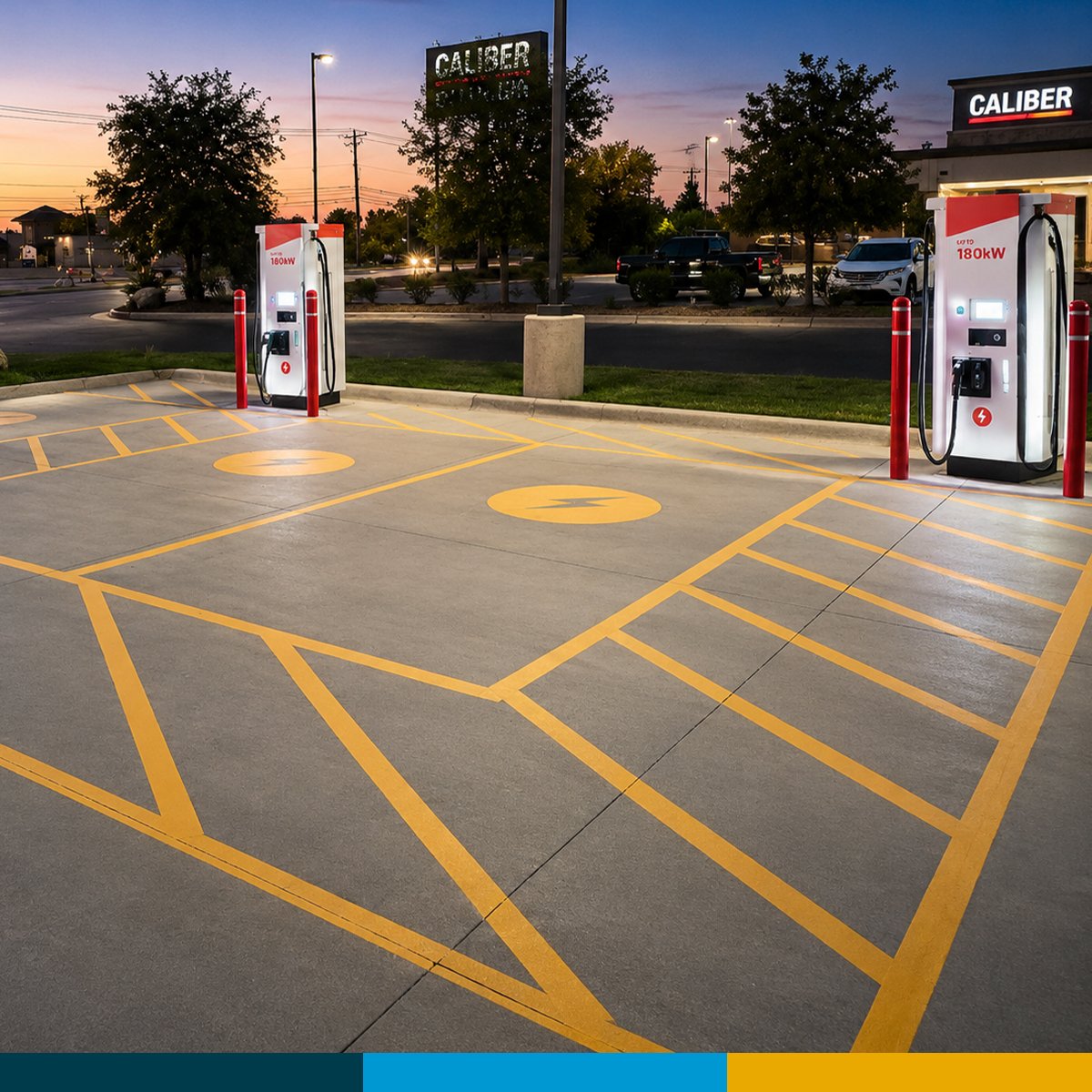
Concrete, mounting and protection. Pads poured to the manufacturer's template, and bollards placed so a delivery truck does not end the charger's life in year two.
Restoration you do not have to chase. Saw cuts closed, paving patched, striping and signage replaced, and the lot handed back the way your customers expect it.
What happens once the permits are in hand.
Five steps from an empty parking stall to a charger that will take a session.
-
1
Day one on site
Layout and site prep
Stalls marked from the drawings, conduit route staked, utilities located, work area barricaded so the rest of the lot keeps operating.
-
2
Longest phase on most sites
Trenching and conduit
Trench, saw cut or bore from the service to the stalls, set conduit and pull boxes, leave room in the path for the next phase.
-
3
Governed by cure time
Concrete and mounting
Pads poured to the anchor template, pedestals set plumb, bollards placed to take the hit a delivery truck will eventually deliver.
-
4
Typically one day
Charger set and termination
Chargers set, wire pulled and terminated, overcurrent protection sized for a continuous load, equipment bonded and labeled.
-
5
Before the crew leaves
Activation and commissioning
Chargers claimed into your network account, access and pricing set, then every port gets a real session once power is on, and the closeout package comes back to your team.
Work is installed to NEC Article 625 and the accessibility requirements that apply to your site, then inspected by your local authority having jurisdiction before energization. On-site construction usually runs about two to six weeks depending on complexity; permitting, engineering and utility energization sit outside this window and are covered on the commercial EV charging overview. These are typical phases, not commitments. Check local and state requirements.
What you get when the crew leaves.
The closeout package: what went in the ground, what it was built to, and what you will need the day something changes.
The record
As-built drawings
The set red-lined to match what is actually in the ground, including anything that moved in the field. The next crew on site works from these rather than from a drawing that stopped being true on day two.
The evidence
Photos of the buried work
Trench depth, conduit routing, grounding and bonding photographed before the concrete went down. Once it is covered nobody can go back and look.
The proof
Commissioning results
Every port taken through a real charging session and recorded, port by port, so the site is not handed over on the strength of a screen that lit up.
The handoff
Equipment and parts detail
Model and serial numbers for every unit installed, what warranty applies to each, and what a replacement part is when you need one two winters from now.
On this page
Before you start
01Do I need a utility upgrade? 02Can I make money with chargers? 03What drives the cost most?On site
04How long does it take? 05Can my site stay open? 06What do I get at closeout?Already have chargers
07What can I reuse on a swap? 08Repair or replace? 09Can you use my equipment?Before you start
Do I need a utility upgrade to install EV chargers?
Usually yes. The utility sized the transformer at your site for the load you run today.
DCFC (DC fast charging) adds a large block of new load, and the transformer feeding your property was sized for the store you already operate. Once the new load passes what that unit can carry, the utility pulls it and sets a larger one, and that work sits on the utility's schedule rather than yours. It is why the load study and the utility application go in first, before anything is trenched. Check local and state requirements.
Can I make money with EV chargers?
It can pay back, and three things decide how fast: how often the ports get used, what you pay for power, and what the build cost.
Charging revenue follows utilization, so the sites that return soonest are the ones with traffic that already stops. Your energy cost matters as much as the price you set, because demand charges can move the math more than the rate per kWh does. Funding lowers what the site has to earn back, which is why grants and rebates belong in the conversation before the design is final. There is also the part that never shows on the charger, which is what drivers buy inside while they wait. We will walk through the numbers for your site rather than a national average.
What drives the cost of a commercial EV charger installation the most?
Distance and capacity, in that order.
The run between your electrical service and the stalls sets the trenching, conduit and wire, and it is the biggest variable between two sites that look identical from the street. After that comes whether your service has capacity to spare, how much concrete and restoration the layout needs, and how much power the chargers draw. Site conditions decide the number, which is why we assess the property before quoting rather than after.
On site
How long does commercial EV charger installation take?
On-site construction usually runs about two to six weeks depending on complexity. The whole project is longer.
Permitting, engineering and utility energization happen before and after the crew is on site, and those are covered on the overview page. Long conduit runs, a service upgrade or cold-weather concrete stretch the on-site window. These are typical phases, not commitments. Your project manager gives you the schedule for your site once the drawings and permits are in hand.
Can my site stay open during the work?
Yes. Phased construction keeps the stalls you still need open while crews work the ones they do not.
The work area is barricaded, utilities are located before ground is broken, and the lot is restored with saw cuts closed, paving patched and striping and signage replaced before the crew leaves. Restoration is part of the scope, not a follow-up you have to chase.
What do I get when the installation is finished?
We give you a closeout package, and it comes back to your team.
As-builts showing what is actually in the ground, photographs taken while the trench and conduit were still open, equipment serial numbers and warranty registration, inspection sign-offs, and the parts detail for what was installed. Most of the arguments that happen two years into a charger's life come down to nobody being able to say what was installed, how it was wired, or who signed off on it. This is what settles them.
Already have chargers
Can I reuse my existing infrastructure when I replace a charger?
Usually most of it, which is why a replacement costs a fraction of a first install.
Conduit, wire, concrete pads and the incoming service normally stay where they are. What does not always carry across is the mounting pattern and the circuit size. A newer charger with a larger cabinet or a higher draw can force new anchors or a new circuit even when everything else is reusable, so we check the anchor template, the cabinet footprint and the rated draw before quoting a swap. Adding charging units works the same way: if phase one left spare conduit and a service sized past day one, phase two is largely pulling wire. If it did not, expansion starts back at the service.
Should I repair or replace a charger that keeps failing?
Repair while parts support is real and the cabinet is sound. Replace when it is not.
Replace when the manufacturer has ended support, or when the same component fails over and over. Age on its own is a poor signal. A six-year-old unit with parts behind it often outlives a three-year-old orphan. We tell you which one you have before you spend on either.
Can you work with the chargers I already have?
Yes. Most customers bring their own equipment and we build the site around it.
Tell us the make and model early, because the electrical requirements, the anchor pattern, the cabinet footprint and the clearances all shape the design. If the units are already in the ground, we check what carries over before we quote, the same way we would on a swap. If you have not chosen equipment yet, we build to what you pick rather than steer you toward one brand.
Where this page sits in the bigger project.
- EV charger contractors in 47 states, through crews certified on the equipment they install.
- Not served: Alaska, Hawaii, California. We say so before you spend time on scoping.
- We run projects in several states at the same time, so a multi-site rollout does not have to happen one market after another. See all locations
Phase 1
Engineering
Load calculations, the utility application and stamped EV charging station design drawings, settled before anyone breaks ground.
Phase 2
Permitting
The permits your project needs, pulled and filed jurisdiction by jurisdiction, so you never sit in a permit office.
Phase 3
Installation
Trenching, conduit, concrete and the charger set, plus replacing or adding to the chargers already in the ground.
Phase 4
Inspection
We schedule the inspection with your local inspection authority, meet the inspector, and close out any findings.
Phase 5
Utility energization
Chargers cannot take a session until the utility flips the switch. We stay on that handoff until the site is energized.
Send us the site. We will tell you what it will take.
A United Uptime Services project manager walks the layout with you, checks the service, and comes back with what the lot will take and what it will not. You get a scope with the site work called out separately from the equipment, so you can see where the number comes from.
One point of contact
One project manager owns the schedule and the communication, from site assessment through utility energization.
Documentation at closeout
As-builts, photos, serial numbers and parts detail come back to your team when the work is finished.
Certified crews
Our crews hold the certifications the equipment requires, and we do the installation. Coverage in 47 states.
Prefer to talk first? Call (833) 543-0101 and ask for the EV Charging division. They will pull up your site while you are on the phone.
Tell us about the site
Number of stalls, existing chargers, and anything you already know about the electrical service. Read by a project manager, not a sales queue.