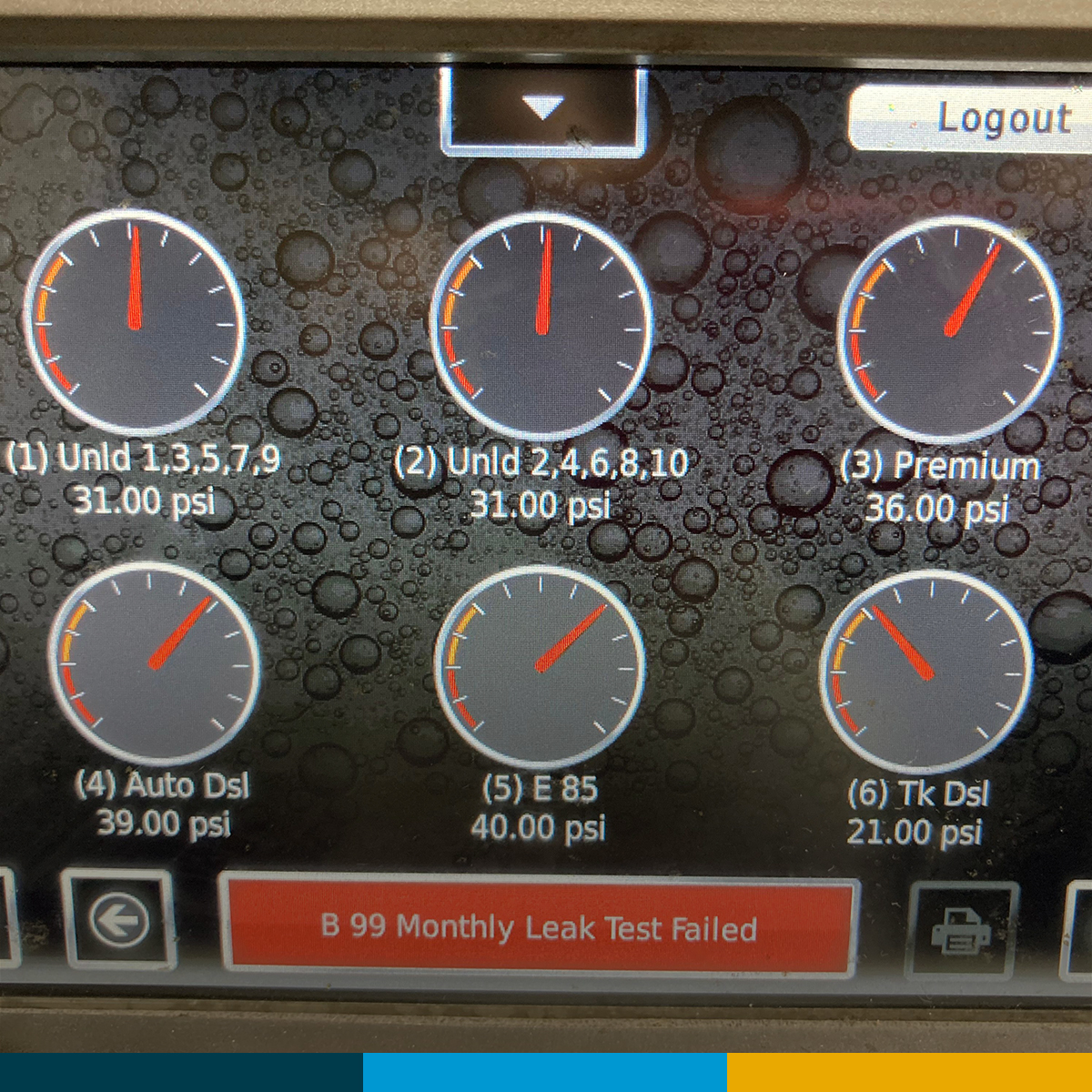
3 min read
Is Your ATG Talking to You?
Three Things to Check Before a Small Alarm Becomes a Big Problem. It happens at every fuel site eventually. The ATG starts throwing alarms. Maybe...
10 min read
United Uptime
:
Updated on September 14, 2026
KEY TAKEAWAYS
It is a little after five in the morning. The delivery driver is still on the lot, the tank gauge behind the counter is beeping, and the opener has hit the silence button twice already because customers are lining up. It is the third alarm this month. Nobody wrote down what it said. By the time the manager gets in, the screen is quiet again, and the only trace is a line in an alarm history that nobody will read until an inspector asks about it.
That scene plays out at gas stations and fuel sites every week, and it is the reason the automatic tank gauge, the ATG, has a reputation it does not deserve. Operators learn to treat the beep as noise. The gauge is doing its job. Nobody has told the people at the counter which ATG alarms matter, which ones are routine, and what to do in the first few minutes either way.
This post sorts the common tank gauge alarms into groups, uses the names you will actually see on the console, explains what your inspector sees when they pull the alarm history, and gives you a short routine that works for whoever is on shift. Keep your gauge manual and your state's rules as the final word. This is a way to think about the beeping.
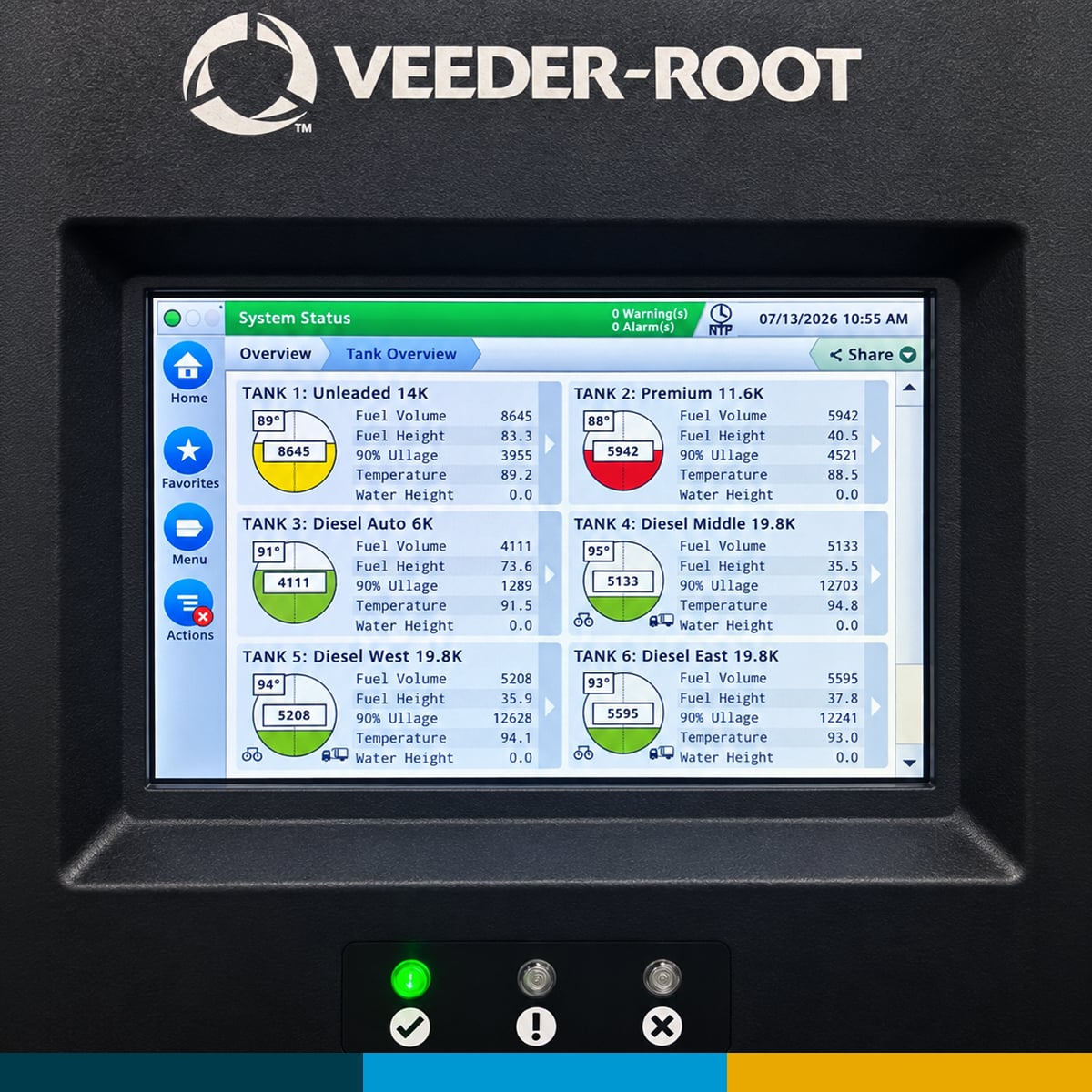
An automatic tank gauge is the console, usually behind the counter or in the back office, that watches your underground storage tanks around the clock. On most sites it is a Veeder-Root TLS-350 or TLS-450, or a comparable console from Franklin Fueling or OPW. Whatever the brand, everything it does comes back to two questions: how much product is in the tank, and is any of it leaving the way it should not. ATG alarms that speak to the second question are the ones that carry weight with your inspector and your insurer.
Your gauge watches a probe in each tank for fuel level, water, and temperature. It watches liquid sensors in your turbine sumps, dispenser sumps, and, on double-wall tanks, the interstitial space between the walls. If you have pressurized product lines, it watches those lines for pressure loss. And it runs leak tests on the tank itself, either on a schedule or continuously (on Veeder-Root consoles the continuous version is called CSLD). Each of those watch points has its own alarm, and each alarm has a name on the screen that sounds equally urgent. They are not equally urgent.
The gauge does not know which alarm is serious. That is the operator's job, and it takes about five minutes to learn.
Console wording varies by manufacturer. The names below are the common Veeder-Root wording because that is what most operators read off the screen. Other consoles use their own labels for the same alarms, and your gauge manual has the full alarm code list for your model.
These are the alarms where the right move is to stop what you are doing, note the time and the exact alarm text, and get a qualified technician involved the same day.
Fuel alarm or sump sensor alarm. A liquid sensor sitting in a turbine sump, a dispenser sump, or a transition sump has one job: report liquid. On the console it usually shows with the sensor position and a type, such as "L1 Fuel Alarm," "Liquid Warning," or "High Liquid Alarm." If it alarms, something is in that space that should not be. It might be rainwater. It might be product. You do not know which until someone opens the lid, and the alarm history now shows that you were told. A sump alarm is the single most common way a leak detection system reports a problem, and the one most often silenced.
Annular space or interstitial alarm. On double-wall tanks, a sensor sits between the inner and outer wall. If it reports liquid, product or groundwater has gotten somewhere it should not be. Treat it like a sump alarm.
Line leak alarm or PLLD shutdown. If your gauge monitors pressurized product lines, a line leak alarm means it saw pressure behave in a way it should not. Some gauges shut the submersible pump down on their own and show a shutdown alarm. Either way, this is not one to silence and revisit later.
Periodic test fail, annual test fail, or gross test fail. Most gauges run a leak test on each tank and report a pass, a fail, or an inconclusive result. A fail is exactly what it sounds like. An inconclusive result that repeats is also a signal, usually that the tank is too busy for the test to run cleanly, which is its own conversation with your service provider.
Probe out, sensor out, or invalid fuel level. When the probe or a sensor stops reporting, the gauge is not watching that tank or that sump anymore. Nothing is leaking, as far as anyone knows, but nobody can prove it, and the leak detection record has a gap starting now.
Sudden loss alarm. A drop in product level with no delivery or dispensing to explain it. It may be a bad reading. It may not.
Check local and state requirements for leak detection response in your area. Federal underground storage tank rules treat unexplained alarms and failed tests as a suspected release that has to be investigated, and many states set a specific window for doing so. The clock starts at the alarm, not at the point someone decides to take it seriously.
These alarms deserve a look and a note, but they are the gauge describing normal life at a fuel site, not sounding a leak.
Delivery needed or low product. The tank is getting low. Your fuel supplier may already know; your gauge is just faster.
Overfill alarm or high level during a delivery. The driver is filling the tank, and the gauge is warning that it is getting full. This is the alarm you most want to hear at the moment it fires, and the one most often silenced by reflex. If an overfill alarm fires when no delivery is happening, move it to the first list.
High water alarm. Water in the bottom of the tank has reached the level the gauge is set to flag. It is not an emergency in the next hour. It is a fuel quality problem in the making, and it is worth reading the post on what bad fuel looks like before your customers notice.
Communication alarm, printer error, and setup alarms. The gauge cannot talk to a dispenser controller or the remote monitoring connection, the printer is out of paper, or a setting was changed. These are housekeeping. They matter because a gauge with a communication alarm may also not be reporting to whoever monitors it remotely.
The pattern to watch for is repetition. A delivery alarm once a week is a delivery. A high water alarm that comes back after every drop is a tank that needs attention. A communication alarm that never clears is a gauge that is quietly not doing part of its job.
Tape this next to the console. Names follow the common Veeder-Root wording; check your gauge manual for the exact label on your model.
| Alarm as it appears on the console | What it usually means | What to do |
|---|---|---|
| Fuel Alarm, L1 through L5 Fuel Alarm, Liquid Warning, High Liquid Alarm | A sump or dispenser pan sensor found liquid | Stop and call. Note the time and sensor. |
| Annular Space Alarm, Interstitial Alarm | Liquid between the walls of a double-wall tank | Stop and call. |
| Line Leak Alarm, PLLD Shutdown Alarm, Line Equipment Fault | A pressurized product line failed its test, or the line leak detector faulted | Stop and call. Pump may already be shut down. |
| Periodic Test Fail, Annual Test Fail, Gross Test Fail | The tank leak test did not pass | Stop and call. |
| Sudden Loss Alarm | Product level dropped with no sale or delivery to explain it | Stop and call. |
| Probe Out, Sensor Out, Invalid Fuel Level | The gauge lost its view of a tank or sump | Call the same day. Leak detection has a gap until fixed. |
| Overfill Alarm, High Product Alarm | Tank is near full, usually during a delivery | Confirm a delivery is in progress. If not, call. |
| High Water Alarm | Water at the bottom of the tank reached the set point | Note it. Schedule a look. Watch for repeats. |
| Delivery Needed, Low Product | Product is low | Note it. Order fuel. |
| Communication Alarm, Printer Error, Paper Out | Housekeeping. The console cannot reach a device, or needs paper | Note it. Fix it so remote monitoring keeps working. |
Every alarm your gauge raises goes into an alarm history the gauge keeps, whether anyone acknowledges it or not. Pressing the alarm acknowledge button, or clearing the alarm on the console, stops the noise. It does not remove the entry. When an inspector visits, that alarm history is one of the first things they ask to see, right alongside your leak detection test results and your training records. The site walk-through post on this blog covers what else is on that list.
An alarm you cleared is still an alarm you were told about. The history shows when it fired and, on many consoles, when someone pressed the button, and nothing in between.
That gap is where trouble lives. An inspector reading a fuel alarm at 5:12 a.m., acknowledged at 5:13 a.m., with no service record and no note, is not looking at a tank problem yet. They are looking at a site that does not respond to its own leak detection equipment. That is how a routine UST compliance inspection turns into a notice of violation, and the post on what to do when one arrives explains how much work follows.
The cost of a technician opening a sump lid on a rainwater alarm is small. The cost of a release that the gauge reported and nobody investigated is not, and the paperwork afterward is the least of it.
This routine is short enough to tape next to the gauge, and it works for whoever is on shift.
WHAT TO DO THIS WEEK
Do that for a month and two things happen. The counter staff stop treating every beep the same, and your alarm history starts reading like a site that pays attention.
Gauges alarm; that is what they are for, so a clean record has entries in it. What makes it clean is that every alarm has an answer next to it: what it was, who looked, what they found, what was done, and what is still open. That is the same standard a good service closeout should meet, and the post on closeout documentation walks through it.
For a small independent site, that answer can live in a notebook by the gauge, in photos on a phone, and in the tech notes your service provider leaves behind. For larger operators, it lives in a service record system and in the reports a remote tank monitoring program produces.
This is also where remote tank monitoring earns its place. A gauge that only alarms to the person standing in front of it depends on that person. A gauge that reports to someone whose job is to read ATG alarms, sort them, and send a technician when it matters takes the five a.m. decision off the opener's plate. United Uptime Services provides tank monitoring and reporting for operators who would rather have that alarm history kept, read, and ready for an inspector without adding it to the counter's job description.
The automatic tank gauge is the one piece of equipment on your site that never stops working and never stops talking. Sites that run well have gauges that alarm like any other. The difference is that somebody knows what each ATG alarm means, answers the serious ones the same day, and can show an inspector the record without a search.
If your gauge has been alarming and nobody is sure which alarms matter, or your alarm history has gaps you would rather explain now than during an inspection, United Uptime Services can help. Contact us to have a qualified technician review your alarm history and set up remote tank monitoring that reads it for you.
Which ATG alarms matter most?
Fuel alarms and sump sensor alarms, annular space alarms, line leak and PLLD shutdown alarms, a periodic or annual test fail, a sudden loss alarm, and a probe out or sensor out alarm. Those point at fuel where it should not be, or at the gauge losing its ability to watch for it. Delivery needed, overfill during a drop, high water, and communication alarms need a note and a look, not an emergency response.
Why does my ATG keep alarming after a delivery?
The most common reasons are an overfill or high product alarm set close to the tank's working capacity, or a high water alarm as the drop stirs up water in the bottom of the tank. If the alarm is a fuel alarm, sensor alarm, or leak test alarm rather than a level alarm, treat it as serious and get it checked.
What does a sudden loss alarm on a tank gauge mean?
The gauge saw the product level in a tank drop faster than sales or a delivery can explain. It can be a bad probe reading. It can also be product leaving the tank. Note the time, do not clear it and move on, and get a qualified technician to check the tank and the probe the same day.
What does a probe out alarm mean?
The console lost communication with the probe in that tank. It is not reporting a leak, but it is no longer able to watch for one, so your leak detection record has a gap until the probe is fixed. Treat it as a same-day service call.
Can I just clear or silence a Veeder-Root alarm?
You can acknowledge the alarm to stop the sound. You cannot erase the record. The console logs the alarm, and many consoles log the acknowledgment too; an inspector can read it. Silence it if you need the noise to stop, then follow the same routine you would have followed if it were still beeping. If the same alarm comes right back, the condition that caused it is still there.
Does an inspector look at my ATG alarm history?
Usually, yes, along with your leak detection test results. An alarm with no follow-up next to it is a question you will be asked to answer. Check local and state requirements for underground storage tank record keeping and alarm response in your area.
What does remote tank monitoring do that my gauge does not?
The gauge raises the alarm. A remote tank monitoring program has someone read it, sort it, and flag it for a technician when it matters, and it keeps the record in a form you can hand to an inspector. It turns the gauge from a thing that beeps at the counter into a record someone is responsible for.
3 min read
Three Things to Check Before a Small Alarm Becomes a Big Problem. It happens at every fuel site eventually. The ATG starts throwing alarms. Maybe...
5 min read
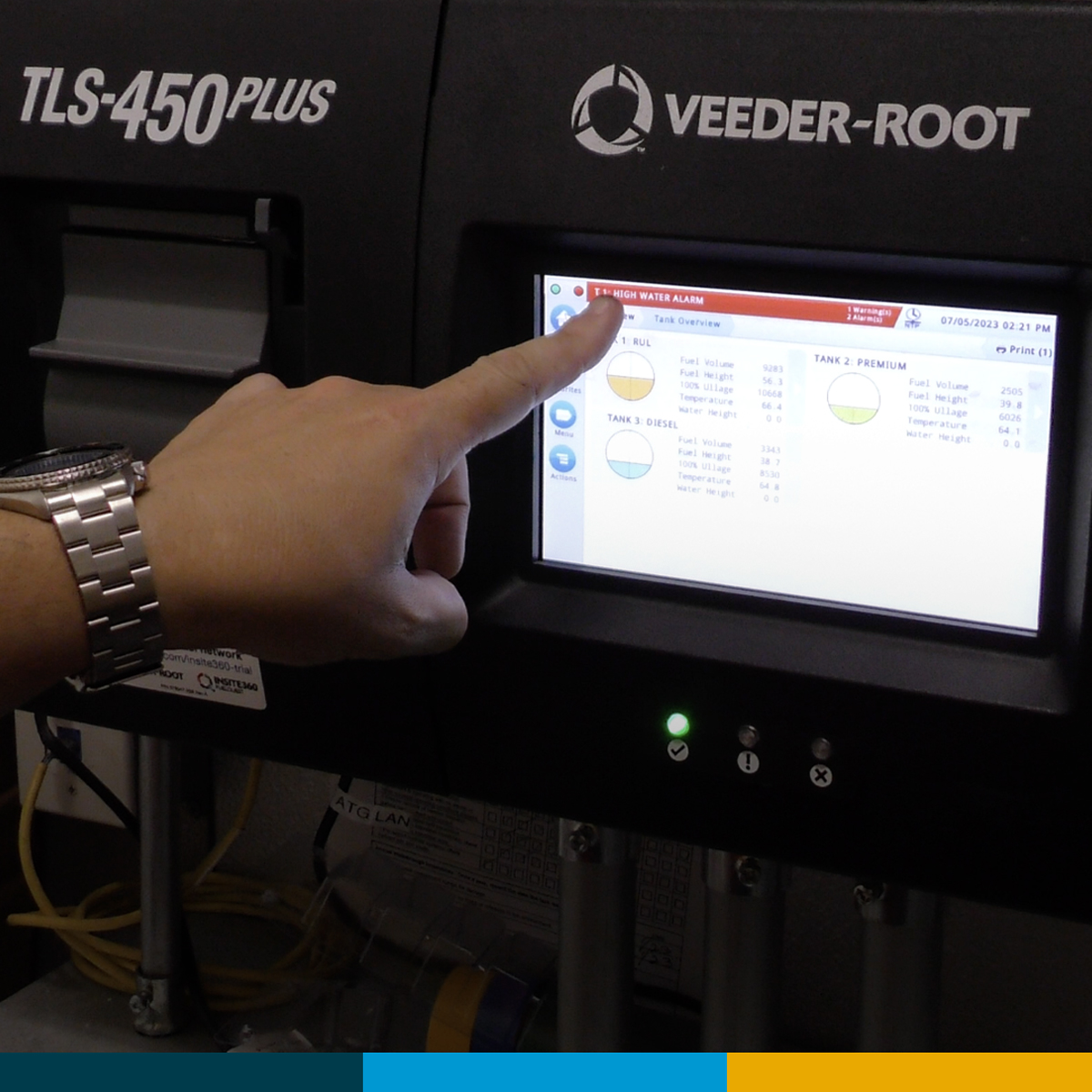
Your ATG runs a line leak test every time the pumps shut off. But when was the last time anyone confirmed the results were accurate, or even reviewed...
5 min read
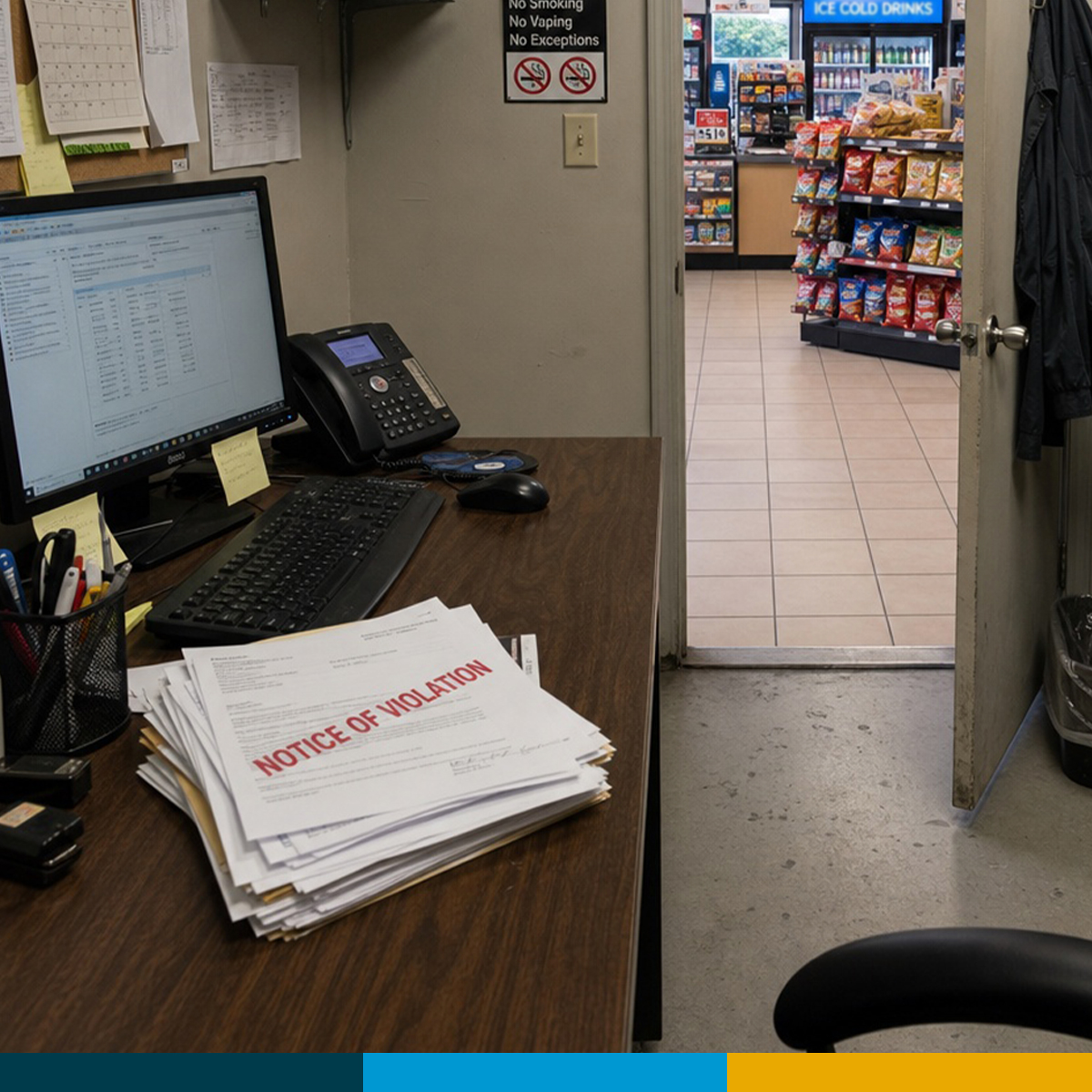
The mail comes in with the fuel invoices and a plain envelope from the state. Inside is a Notice of Violation from your last inspection. There is a...