5 min read

Hurricane Season Starts Today. Here Is Your Pre-Storm Walk.

Hurricane Season Starts Today. Here Is Your Pre-Storm Walk.

June 1 is the official start of Atlantic hurricane season. For operators along the Gulf, the Southeast, and even up the mid-Atlantic, the first named storm can show up any time between mid-June and August. Most sites get one week of warning before a tropical storm watch turns into something that affects business. That week is too late to do real prep. The work has to be done now.

This is not a meteorology piece. This is a pre-storm walk. Eight things to verify and document before the first watch alert hits your phone.

KEY TAKEAWAYS

  • Hurricane season officially opens June 1. The window to walk your site is now, before the first watch.
  • A site is not storm-ready because the generator runs. It is storm-ready when power, fuel, signage, comms, and containment are all verified and documented in the same week.
  • Watertight integrity is the part most operators skip. Storm water that gets into a sump, dispenser base, or conduit penetration shows up later as an NOV.
  • Eight things to walk and document this week.
  • A pre-storm walk that was not documented is a walk that did not happen, from the perspective of insurance and inspectors.

1. Generator load test

If your standby generator has not been run under load in the last 90 days, run it. A monthly exercise cycle is not a load test. A load test means powering actual site equipment off the generator for long enough to confirm transfer, voltage, frequency, and run stability. The two failures we see most often after a storm are generators that started but could not carry the load, and transfer switches that did not transfer cleanly. Both of those are testable today.

Document the load test. Date, duration, equipment carried, observed voltage and frequency, any anomalies.

2. Transfer switch

Walk the automatic transfer switch. Look at the contacts if they are visible. Listen for the transfer cycle during the load test. A transfer switch that clicks and chatters during transfer is a switch that may not transfer at all the next time. If you have not had it serviced in the last 24 months, schedule it.

3. Fuel reserve

After a storm hits a market, the demand spike is immediate. Operators who run low on the first day of recovery hand business to whoever has fuel left. Walk your inventory levels and your top-off cadence. If you can carry a higher reserve through the watch window, do it. If your supplier is going to be a bottleneck during a regional emergency, know that now.

4. Emergency stop button

Test it. Every dispenser island. Press, confirm the dispensers de-energize, reset, confirm they come back. This is a five-minute walk on a small site and a 20-minute walk on a large one. It is also the single most operationally important button on the property when the wind picks up.

5. Watertight integrity

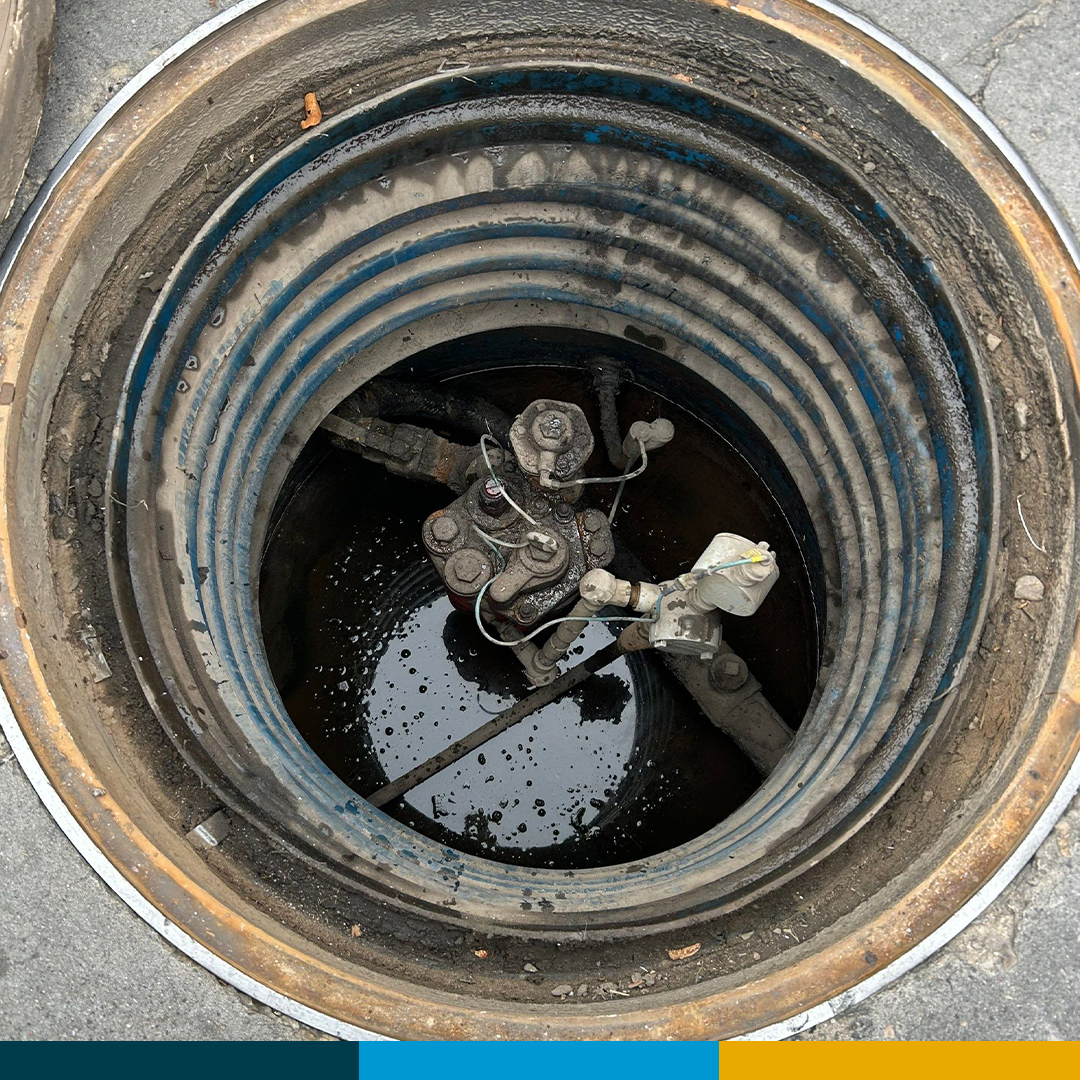
This is the one most operators skip, and it is the one that most often shows up as a compliance issue after the storm. Walk every penetration into the underground containment system and verify the seal.

The consequence is not only the NOV that shows up weeks later. Water that gets into a containment sump during a storm can work its way into the tank. That is water in your fuel during the event. Tank alarms. Sales held until the water is pumped out. In a worst case, fuel that goes out the dispenser carrying water, which becomes a customer complaint and a bad-fuel claim.

  • Containment sump lids and gaskets. Look at the gasket. Look at the lid bolts. Look at the cover seat. A sump that takes on a few inches of storm water is a sump that has water inside the lid seal when the inspector comes.
  • Spill bucket lids. Same check. The collar around every fill port. If the lid does not seat cleanly, water gets in.
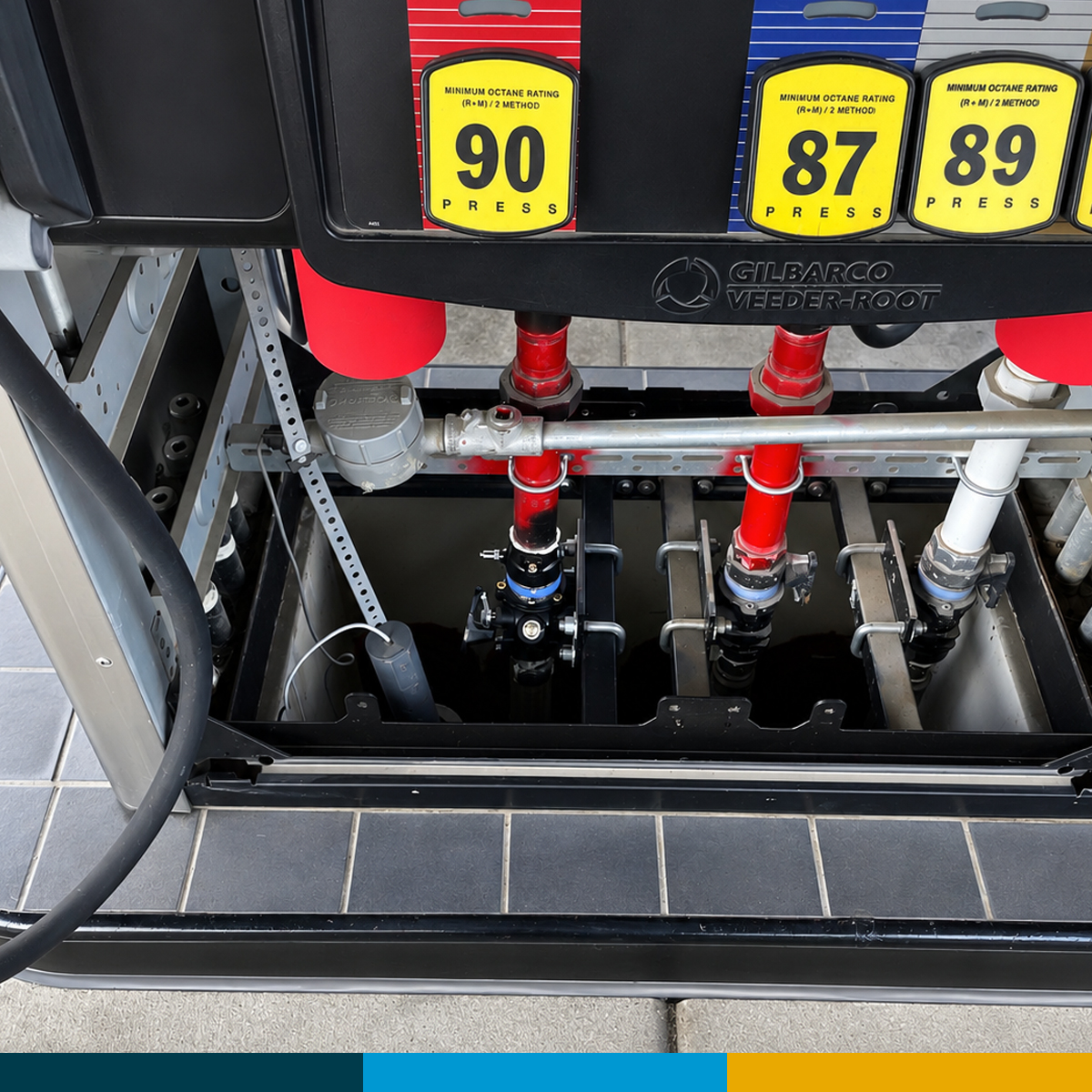
  • Dispenser bases. Walk every dispenser and look at the boot seal where the dispenser meets the island. A failed boot seal lets storm water into the dispenser sump.
  • Vault covers. If your site has any below-grade vaults (vent risers, manifolds, pump vaults), the cover seal matters during a storm.
  • Conduit penetrations. Where electrical conduit enters the building or the dispenser sump, the seal around the conduit is a common failure point. A bead of sealant that has degraded over the last three summers is not a watertight seal.

Document each check. Photo of any seal that looks worn or compromised. Note for service.

WHAT TO DO THIS WEEK

Walk every sump, spill bucket, dispenser boot seal, vault cover, and conduit penetration on your site. Photograph any gasket, seal, or fastener that looks worn. Send the list to your service partner this week so the repair is booked before the first watch alert in your market.

6. Exterior signage and lighting

Walk the perimeter. Loose canopy panels. Loose signage. Anything that could become a projectile in 60-mph wind. Under-canopy lighting that is out or flickering. Pole signs that have visible play in the mount. If you have items that need to come down before a storm, identify them now and have a plan for who takes them down and where they get stored.

7. Comms tree

Who calls who in the first 30 minutes after the storm clears? Who has authority to close or reopen the site? Who has authority to call for fuel delivery, electrical service, or environmental cleanup? Write this down. Put it where the on-site team can find it without you. The first 30 minutes is when decisions get made. If the answer to "who do I call" is "I will figure it out," that is the wrong answer.

8. Documentation in one place

Pull together what you have on the site. Insurance contact, environmental cleanup contractor on file, fuel supplier emergency number, service partner for dispenser and ATG support, electrical contractor on file, local emergency management contact. If any of these are missing or out of date, fix it this week.

A note on compliance

Storm water intrusion into containment systems is one of the more frequent triggers for an NOV in coastal states. Check local and state requirements for your storm-response documentation. Some states require a post-storm site assessment within a specific window. Knowing the requirement in advance is part of the pre-storm walk.

When to call your service partner

If you walk the watertight integrity items in section 5 and you see a worn gasket, a degraded conduit seal, or a sump lid that does not seat cleanly, do not wait. The window between "I see something" and "the watch alert hits" can be one week. Service partners who book those calls early will be the only ones with availability the day before landfall.

Frequently Asked Questions

Why does United Uptime Services recommend a pre-storm walk on June 1?

Because the official start of Atlantic hurricane season is June 1, and most coastal operators get less than one week of warning before a watch alert. A pre-storm walk done in early June leaves time to schedule service for anything that comes up. A walk done after the watch is announced is competing with every other operator in the market for the same service availability.

What is the most overlooked item in a pre-storm fuel site walk?

Watertight integrity. Generator load tests get done because they are visible. Sump and spill bucket lid seals get skipped because they are not visible until water gets in. A cracked sump gasket or a worn dispenser boot seal is a storm-water entry point, and storm water inside containment shows up later as a compliance finding.

How long does a thorough pre-storm walk take?

For a small site with two to four dispenser islands, plan on two hours. For a larger site, half a day. The watertight integrity section is the longest part because it requires opening lids and inspecting seals. The documentation portion is the shortest and the most often skipped.

What records should I keep from the walk?

At minimum, the load test results, the emergency stop button test record, photos of any seal or hardware that is flagged for service, the updated comms tree, and a one-page summary signed and dated. Insurance and inspectors both look for documentation that the walk was performed. The walk that was not documented did not happen, from the perspective of the file.

Can my service partner do the pre-storm walk for me?

Yes. United Uptime Services qualified technicians can run the watertight integrity portion of the walk and provide documentation. Contact your branch to schedule before the first watch alert in your market.

What’s That Liquid in Your Containment Sump?

4 min read

What’s That Liquid in Your Containment Sump?

4 Things to Check Before a Routine Walk-Through Becomes a Regulatory Problem. You open a sump lid during a routine walk-through and there’s liquid...

Read the Full Article
After the Storm: A Quick Walk-Through for Fuel Sites

3 min read

After the Storm: A Quick Walk-Through for Fuel Sites

The storm passes. The lights come back on. Customers start pulling in. And somewhere on your forecourt, a small thing is starting that will turn into...

Read the Full Article
When the Work Is Done: What Closeout Documentation Should Show You

3 min read

When the Work Is Done: What Closeout Documentation Should Show You

The work is done. The technician's truck is pulling out of the lot. Your dispenser is running, your alarm is cleared, your sump is dry. And then a...

Read the Full Article