4 min read
When the Heat Hits, Your Dispenser Slows Down. Here Is Why.
The forecourt is busy. The lunch rush rolls in. A customer pulls up to the pump, swipes the card, lifts the nozzle, and stands there. And stands...

5 min read
United Uptime
:
June 15, 2026
Your inventory reconciliation comes in for the week and the variance is bigger than it should be. Not huge. Not enough to make you call anyone. Just one of those numbers you tell yourself you will keep an eye on. Three weeks later it has not gotten better. It has gotten worse.
KEY TAKEAWAYS:
Fuel theft is climbing again. Higher fuel prices and organized rings have made forecourts a target in ways most operators have not seen in years.
Most operators watch for drive-offs. The bigger loss often hides inside the dispenser, where pulser tampering and skimming can run for months before anyone notices.
A small but persistent inventory variance is the most common early signal. If your reconciliation has drifted in the last 60 days, that is a flag worth chasing.
Equipment-level protections at the dispenser, paired with a regular inspection routine, are the most effective combination. Cameras alone are not enough.
Fuel theft used to feel like a problem for someone else. Big urban sites, late-night highway stops, the kind of places where you accept some loss as a cost of doing business. That is not where things stand in 2026. Higher fuel prices, organized rings traveling between states, and increasingly capable consumer-grade tampering devices have all changed the picture. Site owners who have not looked at their loss prevention setup in two or three years are often surprised by how exposed they have become.
This post is a walk through what is actually changing, where the losses are coming from at the dispenser level, and what a site owner can reasonably do this month without overhauling the whole operation.
Three things have shifted at once. Fuel prices stayed elevated long enough to make theft worth more per gallon than it was a few years ago. Organized rings have refined their methods, particularly around card skimming and pulser tampering, and they move quickly between sites and states. And the cost of the small electronics they use has dropped sharply. A Bluetooth skimmer that cost hundreds of dollars to build five years ago is a fraction of that today.
For independent operators, the result is that the math has changed. The risk per site is higher and the methods are harder to spot. The good news is that the playbook for catching it has also improved, especially at the dispenser hardware level.
Fuel theft at a forecourt generally splits into two categories, and they are very different problems to solve.
Drive-offs and walk-ons. A customer pumps fuel and leaves without paying, or pays for one product and pumps another. This is the visible kind. It shows up on your camera review and you see it happen.
Inside-the-dispenser theft. This is the quieter kind. Pulser tampering, skimmers, internal wiring modifications. It does not show up on camera in any obvious way because the dispenser looks normal from the outside. The loss shows up later in your inventory reconciliation or in a wave of customer card complaints.
Operators almost always overinvest in the visible kind of theft and underinvest in the kind that hides inside the dispenser.
That is not because they are not paying attention. It is because the inside-the-dispenser kind is harder to think about. There is no incident to react to. There is just a number that does not look right.
Every dispenser uses a pulser to send a signal to the point of sale system telling it how much fuel has been delivered. The pulser is, in effect, the cash register inside the pump. If it is tampered with, the dispenser keeps pumping fuel, but the point of sale records a smaller amount than was actually delivered. The customer pays for what the POS recorded. The difference walks off as inventory loss.
Tampering can be as simple as a small device wired between the pulser and the dispenser control board. It is not visible from the customer side. It is often not visible from a quick walk-around either. It typically requires the dispenser door to be opened to install, which is why dispenser door security and pulser-level protection have both become a bigger conversation.
If your inventory variance has gotten worse over the last 30 to 60 days and no one can explain it from product loss, calibration, or temperature, pulser tampering is on the short list of things to check.
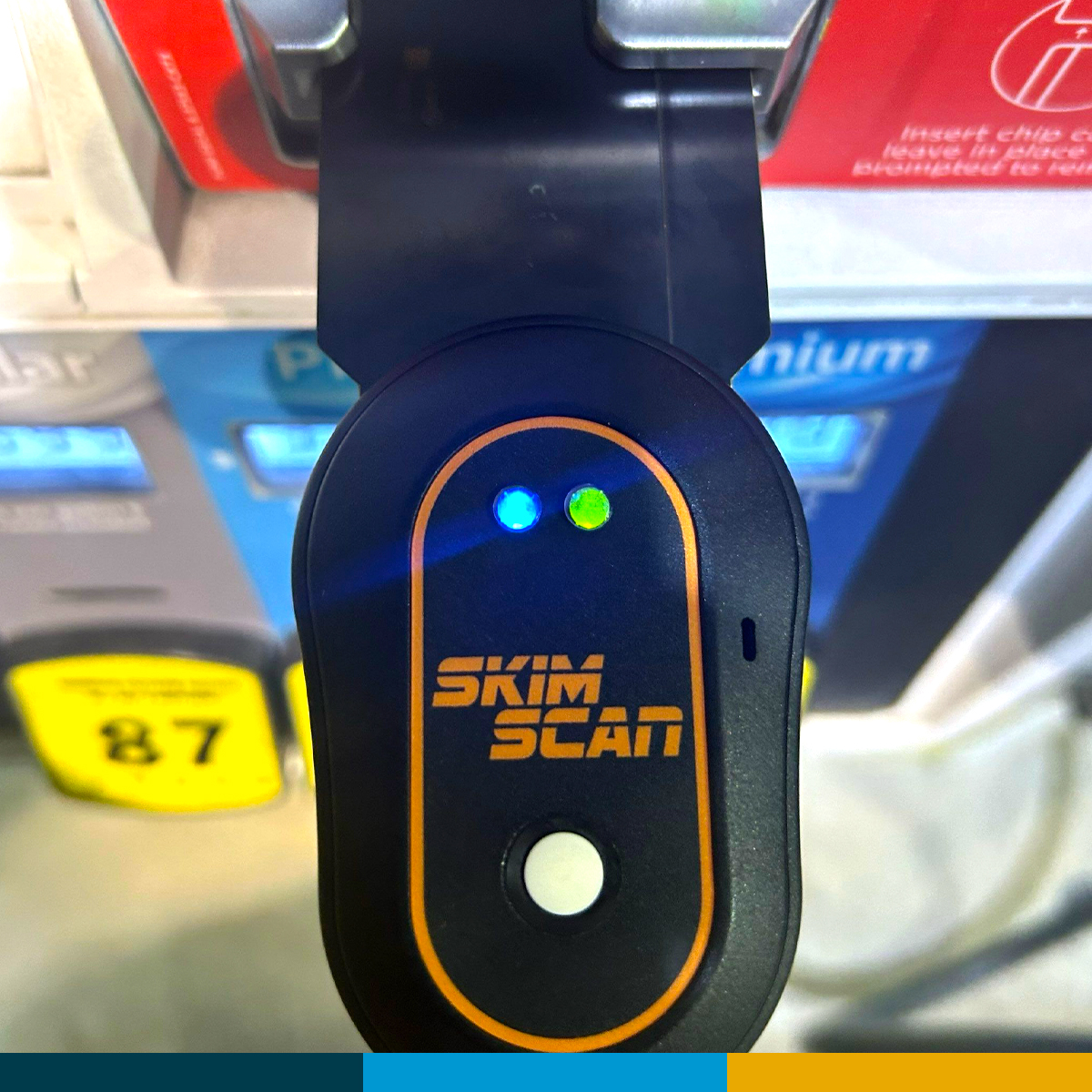
Card skimming at the dispenser is a different problem from fuel theft, but they often show up at the same time. The same kind of access that lets someone install a pulser device also lets someone install a card skimmer or a Bluetooth-enabled overlay on the card reader.
The signal that something is wrong here is usually not from your inventory. It is from your processor or your customers. A cluster of fraud reports tied to your site, or a notice from your acquirer, is often the first time an operator learns there was a skimmer present.
Routine dispenser door inspections, tamper-evident seals on card readers, and a habit of looking inside the dispenser cabinet every time a technician is on site are the simple and consistent defenses. They do not cost much. They just have to actually happen.
WHAT TO DO THIS WEEK:
Pull your last 60 days of inventory reconciliation. Mark any week where the variance is meaningfully higher than your normal range.
Walk the forecourt and check every dispenser door for signs of forced entry, scratched locks, or missing or broken tamper-evident seals.
Check card readers and surrounding bezels for overlays, loose pieces, or anything that does not match the rest of the dispenser face.
If you have not had a qualified technician inspect inside the dispensers in over a year, schedule it.
Confirm your dispenser door keys and locks are current. Cycled, replaced after staff turnover, and not shared across sites where possible.
If any of these turn up something that does not look right, do not move it, do not clean it up, and do not throw it away. Document it with photos and call your service partner. Evidence matters here, and so does chain of custody if law enforcement gets involved.
The site owners who handle fuel theft well do not treat it as a single problem to solve. They treat it as a routine that runs in the background. Inventory gets watched. Dispenser doors get inspected. Card readers get checked. Technicians on site are asked to look around inside the dispenser cabinet, not just at the part they came to fix.
None of those steps is dramatic. None of them stops every kind of theft. But together they shorten the window between when something goes wrong and when you catch it, which is what determines how much it costs you.
If your inventory variance has drifted recently or you have not had a qualified set of eyes inside your dispensers in a while, contact United Uptime Services to schedule a loss prevention walk at your sites.
How would I know if my dispenser pulser has been tampered with?
The clearest signal is a persistent inventory variance that you cannot explain from temperature, calibration, or product loss. Pulser tampering is not visible from the outside of the dispenser. It generally requires a qualified technician to open the dispenser and inspect.
Are cameras enough to deter fuel theft?
Cameras help with the visible kind of theft, like drive-offs. They do not help much with pulser tampering or skimming, because those happen inside the dispenser cabinet where cameras cannot see. A combination of cameras for the forecourt and inspection routines for the dispenser is the standard playbook.
How often should we inspect inside the dispensers?
At least annually for most sites, more often for sites in higher-traffic or higher-risk areas. Many operators also ask their service technicians to do a quick visual look any time the dispenser is opened for unrelated work.
What do I do if I find something that looks like a skimmer or a tampered pulser?
Do not touch it. Take photos. Call your service partner and, if appropriate, local law enforcement. Preserving the evidence matters both for prosecution and for any insurance or processor claim.
Does my point of sale system catch pulser tampering?
Not directly. The point of sale records whatever signal it receives from the pulser. If the pulser is reporting incorrectly, the point of sale records the incorrect amount as if it were accurate. The discrepancy only shows up later in inventory reconciliation.
4 min read
The forecourt is busy. The lunch rush rolls in. A customer pulls up to the pump, swipes the card, lifts the nozzle, and stands there. And stands...
7 min read
It is a busy Saturday on the forecourt. Cars are stacked three deep at every island. A week later, a regular customer calls, upset, because his bank...
5 min read
A cracked hose, a stuck breakaway, a filter that has not been changed in months. None of these shut your site down today. But each one is a clock...