1 min read
Preventative Maintenance for Fuel Retail Sites
Preventative Maintenance and Priority Support: Protecting Uptime in Retail Fueling For fueling station operators, uptime isn’t optional — it’s...
5 min read
United Uptime
:
Updated on April 6, 2026
A cracked hose, a stuck breakaway, a filter that has not been changed in months. None of these shut your site down today. But each one is a clock ticking toward a dispenser that goes out of service at the worst possible time.
Most fuel site operators think about dispenser maintenance the way most people think about oil changes. You know it needs to happen. You know what happens if you wait too long. But when the site is busy and nothing seems broken, it falls to the bottom of the list.
The problem is that dispensers do not usually fail all at once. They degrade. A filter clogs slowly. A hose develops a hairline crack that has not started leaking yet. A breakaway valve gets stiff from temperature swings and corrosion but still looks fine from the outside. None of these things trigger an alarm on your ATG. None of them show up in your daily sales report. They only become visible when a customer reports a slow flow, when fuel starts dripping on the concrete, or when an inspector walks the site and starts checking.
By the time you notice, the repair is more expensive, the equipment may need to come out of service, and the documentation trail you should have had is missing.
There are a handful of components on every dispenser that wear out through normal use and exposure. They are not exotic parts. They are the pieces that take the most abuse from weather, fuel contact, and daily customer use.
Fuel filters are the most common one. Every dispenser has at least one filter between the underground piping and the nozzle. Its job is to catch particulate and water before they reach the meter and the customer’s vehicle. When a filter clogs, flow rate drops. Customers notice slow dispensing. In severe cases, the dispenser shuts down entirely. A clogged filter also puts extra strain on the submersible turbine pump, which is a much more expensive repair.
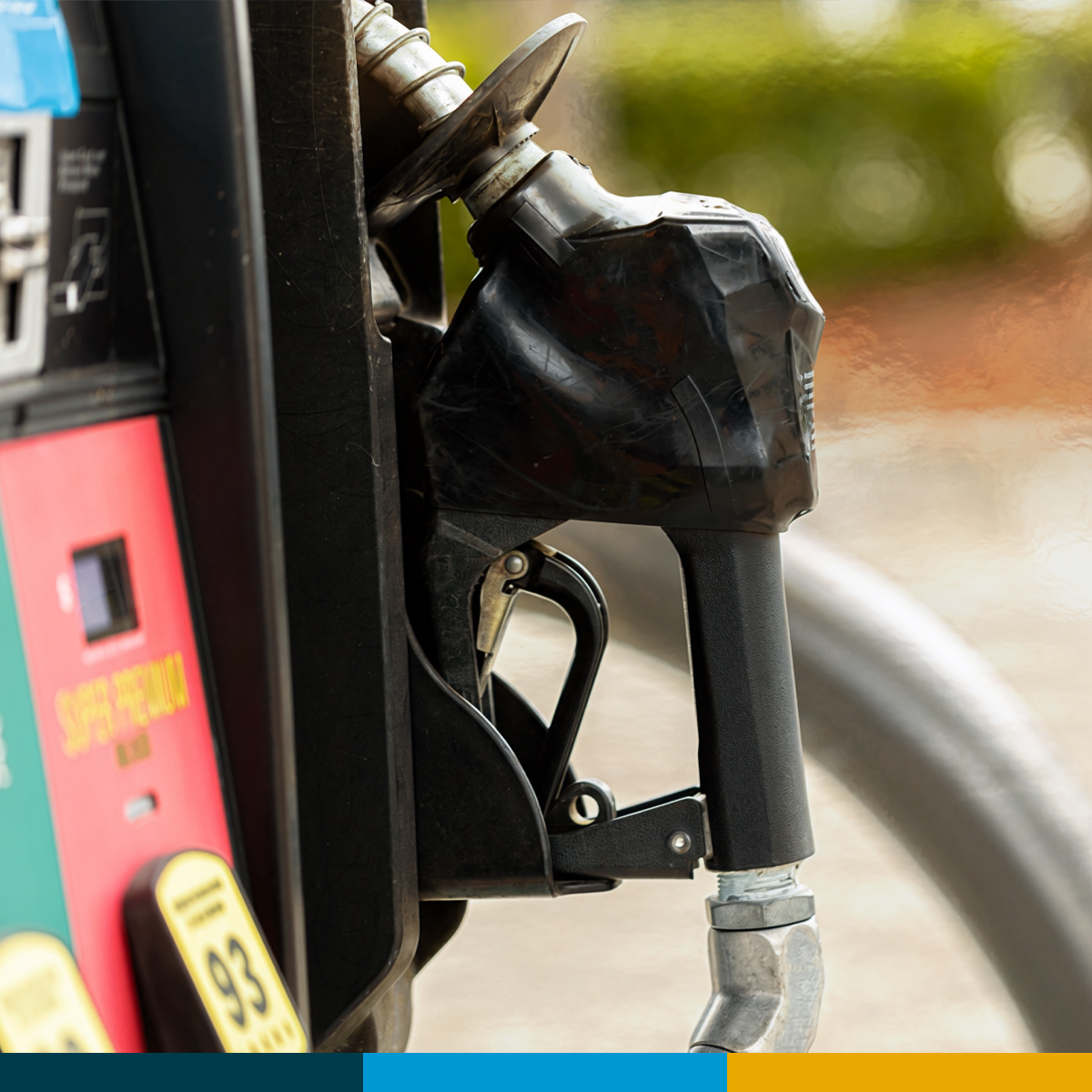
Hoses and nozzles take constant physical abuse. Customers stretch them, drop them, and drive over them. UV exposure and temperature changes crack the outer jacket over time. A hose that looks intact from a distance may have visible cracking or swelling when you look closely. Once the inner liner is compromised, you have a fuel release waiting to happen.
Breakaway valves are the safety devices designed to separate cleanly if a customer drives away with the nozzle still in the tank. They are supposed to stop fuel flow on both sides of the break. But breakaways that have been in service for years can corrode internally, losing their ability to seal properly. If one fails during a pull-away, fuel hits the ground.
Shear valves sit at the base of the dispenser where piping enters from underground. They are designed to shut off fuel flow if the dispenser is struck by a vehicle. Like breakaways, they corrode over time and can lose function. An inspector will check whether the shear valve arm is accessible and whether the valve itself is operational.
The parts that fail on a dispenser are not the expensive ones. The expense comes from ignoring them until they take the whole unit out of service.
Most operators walk past their dispensers every day without really looking at them. An inspector does the opposite. They look at everything, and they are specifically trained to spot the things operators overlook.
Here is what a typical dispenser inspection includes: the condition of hoses and nozzles (cracking, swelling, leaking at the fitting), the operation of breakaway valves, the accessibility and condition of shear valves, evidence of fuel staining or active leaks on the dispenser island, the condition of the dispenser cabinet (rust, damage, missing panels), and whether required safety labels and placards are in place.
That is just the visual walk. If the inspector pulls maintenance records, they are looking for evidence that filters have been changed, that any reported issues were addressed, and that there is documentation showing ongoing attention to the equipment.
The gap for most operators is not that the maintenance is hard. It is that no one documented it. A technician changes a filter and does not log it. A hose gets replaced but there is no record of the old one’s condition. The work happened, but the proof did not make it into the file.
WHAT TO DO THIS WEEK
Walk your dispensers with fresh eyes. Check every hose for visible cracking, swelling, or leaks at the fitting. Test every breakaway by hand. Is it stiff? Does it move freely? Look at the base of each dispenser for fuel staining. Check whether your shear valve arms are accessible and not buried behind equipment or debris. Write down what you find.
A fuel filter costs a fraction of what a submersible turbine pump costs. A replacement hose is a fraction of the cost of an environmental cleanup from a ruptured hose on a busy weekend. A breakaway valve is a fraction of the cost of a fuel spill in front of customers.
The math on deferred dispenser maintenance is not complicated. Every component that wears out has a replacement cost that is manageable when you catch it early and deal with it on your schedule. The same component, allowed to fail in service, costs significantly more. Not just the part itself, but the labor for an emergency call, the lost selling time while the dispenser is offline, and the compliance exposure if an inspector finds equipment that should have been addressed.
There is also a compounding effect. A clogged filter puts strain on the STP. A cracked hose that goes unaddressed eventually fails. A stiff breakaway that nobody tested becomes a safety issue. Each deferred item adds to the next, and the total cost of catching up is always higher than the cost of staying current.
The operators who spend the least on dispenser maintenance over time are the ones who never let small problems sit. It is not about spending more. It is about spending earlier.
For every dispenser on your site, your records should show a history of routine maintenance. That includes filter changes, hose and nozzle replacements, breakaway and shear valve inspections, and any repairs made to the dispenser cabinet or internal components.
These records should be uploaded to your portal. After work is completed, documentation is uploaded to your portal, including Tech Notes, Photos, Required Documents, and parts detail, including what was used and what is required for return.
When an inspector asks about the maintenance history of a specific dispenser, you should be able to pull the record without searching through emails or calling your service provider. The documentation should show what was found, what was done, and when the next service interval falls.
If your current records are thin or scattered, start now. Have your service provider document the current condition of every dispenser on your next visit. That gives you a baseline. From there, every filter change, every hose replacement, every inspection finding goes into the record.
Check local and state requirements for dispenser maintenance intervals and inspection standards. Requirements vary, and your service provider should be familiar with what your state expects.
WHAT TO DO THIS WEEK
Check your records for dispenser maintenance history. Can you find the last filter change date for each dispenser? Do you have documentation of hose and breakaway inspections? If any of this is missing, schedule a baseline inspection with your service provider and make sure everything is uploaded to your portal going forward.
Dispenser maintenance is not glamorous. It does not make headlines like a tank release or a failed compliance inspection. But for most fuel site operators, the dispenser is where revenue happens. Every minute a dispenser is out of service is selling time you do not get back. Every deferred repair is a future emergency that will cost more and come at a worse time.
The pattern is the same one that shows up in every compliance and maintenance topic: the work is straightforward, the parts are affordable, and the documentation takes minutes. The gap is almost always in follow-through. The operators who keep their dispensers running reliably are not doing anything extraordinary. They inspect regularly, replace parts before they fail, and keep the records where they can find them.
If you are not sure when your dispensers were last serviced, or if your records have gaps, that is a good reason to schedule a walk-through with your service provider. Get the baseline documented, set a maintenance schedule, and make sure the paperwork follows the work.
Uptime Insights is a weekly series from United Uptime Services covering the practical side of keeping fuel sites running, compliant, and inspection-ready. New posts every Monday.
1 min read
Preventative Maintenance and Priority Support: Protecting Uptime in Retail Fueling For fueling station operators, uptime isn’t optional — it’s...
4 min read
4 Things to Check Before a Routine Walk-Through Becomes a Regulatory Problem. You open a sump lid during a routine walk-through and there’s liquid...
2 min read
Rebrand reflects a national focus on uptime, forecourt and EV infrastructure, and people-first service that keeps customers running. ...